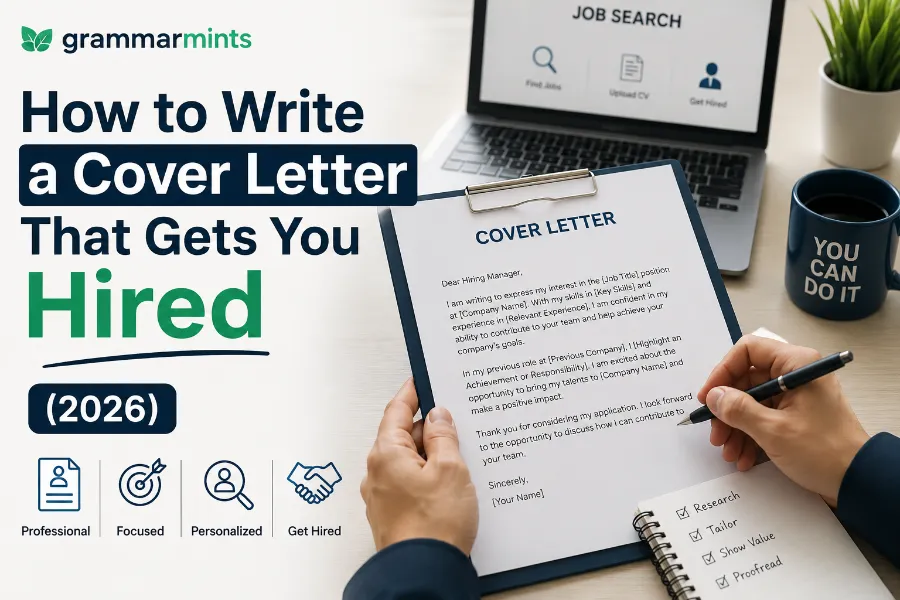
Learning how to write a cover letter is still one of the smartest things you can do for your job search. Even with AI screening tools and one-click applications, hiring managers say a good cover letter can make or break your chances. In fact, one 2026 survey found that 94% of hiring managers say cover letters influence their interview decisions, and one in four call them “very important.” So, if you have been skipping this step, it may be time to rethink that choice.
If you want to learn more about best ai tools for students 2026 guide for practical tips and expert advice.
In this guide, you will learn exactly how to write a cover letter that feels natural, sounds like you, and gets read. We will walk through the format, the structure, and the small details that make a big difference. And yes, we will also look at what the latest data says about length, tone, and AI use.
To get a better understanding of how improve English vocabulary breaks down exactly what to expect.
Some job seekers believe cover letters are outdated. However, the numbers tell a different story. Recruiters and hiring managers still rely on them to judge motivation, tone, and communication skills. In fact, cover letters have become more important since AI now handles much of the resume screening, according to hiring expert Sam DeMase of ZipRecruiter.
To get a better understanding of how to speak English fluently at home breaks down exactly what to expect.
Here is a quick look at what recent research shows:
| Statistic | Finding |
|---|---|
| Hiring managers influenced by cover letters | 94% |
| Hiring managers who read them even when optional | 83% |
| Recruiters who reject candidates based on a weak cover letter | 81% |
| Average time a manager spends before deciding to read further | Under 30 seconds |
| Hiring managers who can spot an AI-written letter | 88% |
These numbers make one thing clear. A cover letter is not just a formality. It is often the first real impression a hiring manager forms of you, before they even open your resume.
If you want to learn more about how to use ChatGPT for writing guide for practical tips and expert advice.
How to Write a Cover Letter: Step-by-Step
Now, let’s get into the actual process. Writing a cover letter does not need to feel overwhelming if you break it into small, manageable steps.
1. Research the Company First
Before you write a single line, spend ten minutes learning about the company. Look at their website, recent news, and the job posting itself. This helps you avoid a generic letter, which is one of the biggest reasons applications get rejected.
For example, if a company recently launched a new product in March 2026, mentioning it shows genuine interest rather than a copy-paste approach.
2. Start With a Strong Opening Line
Your first sentence should say who you are, the role you want, and one reason you are a great fit. Skip the tired opening “I am writing to apply for…” Instead, try something direct and confident.
According to research, 41% of hiring managers say the introduction is the most important part of the entire letter. So, this is not the place to hold back.
3. Show Your Value With Real Examples
Once you have their attention, use one or two short paragraphs to connect your experience to the job. Instead of listing duties, describe results. For instance:
- Weak: “I managed a team and improved sales.”
- Strong: “In 2025, I led a five-person team that increased quarterly sales by 18%.”
Numbers and dates make your claims believable. They also help you stand apart from applicants who write in vague, generic terms.
4. Close With Confidence
End your cover letter with a short, clear closing paragraph. Restate your interest, thank the reader for their time, and invite the next step. A line like “I would welcome the chance to discuss how I can contribute to your team” works well because it is polite but direct.
If you struggle with sentence flow between paragraphs, using transition words can help your letter read more smoothly and feel less choppy.
Cover Letter Format and Length: What the Data Says
Formatting matters just as much as content. A poorly formatted letter can get skipped, even if the writing is strong. Based on multiple 2025 and 2026 recruiter surveys, here is the format hiring managers prefer most:
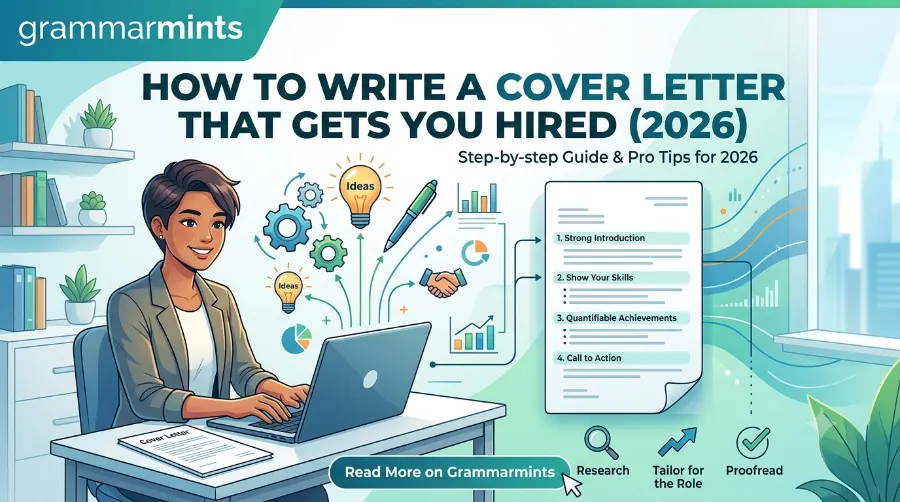
| Element | Recommended Standard |
|---|---|
| Length | 250–400 words |
| Paragraphs | 3–4 short paragraphs |
| Font size | 10.5pt–11pt |
| Page length | One page maximum |
| File format | PDF (unless stated otherwise) |
| Text alignment | Left-aligned |
Around 70% of hiring managers prefer letters within the 250–400 word range. Letters under 150 words often feel thin, while anything over 500 words can come across as unfocused. Keeping things concise also respects the fact that most recruiters only spend seconds on an initial scan, so clarity always wins over length.
If grammar or sentence structure worries you, brushing up on subject-verb agreement rules and comma rules in English can quietly improve how polished your writing feels, even in a short document like this.
Common Cover Letter Mistakes to Avoid
Even strong candidates lose opportunities because of small, avoidable errors. Here are the mistakes that come up again and again in hiring surveys:
- Sending a generic letter. Recruiters can tell within seconds when a letter was not tailored to their company.
- Repeating your resume word for word. Your cover letter should add context, not repeat it.
- Ignoring proofreading. Nearly 80% of recruiters say they reject applications with spelling or grammar mistakes.
- Using overly formal or robotic language. This is one of the top signs that a letter was AI-generated without any edits.
- Forgetting to customize the greeting. “Dear Sir or Madam” reads as outdated in 2026.
Since grammar mistakes are one of the fastest ways to lose credibility, it helps to review guides like common grammar mistakes and commonly confused words in English before you hit submit. A quick check of apostrophe rules can also save you from small slips that are easy to miss.
Should You Use AI to Write a Cover Letter?
AI tools are now part of many job seekers’ routines. About 53% of newly hired employees in 2024 said they used AI somewhere in their job search, which is more than double the year before. However, this comes with a catch.
Roughly 88% of hiring managers say they can tell when a cover letter was written entirely by AI, and a third say they can spot it in under 20 seconds. Common giveaways include generic phrasing, overly formal wording, and repeated buzzwords.
The safer approach is to use AI as a starting point, then rewrite it in your own voice. Add real details, specific numbers, and a tone that sounds like you, not a template. This also applies if you’re drafting other career documents, since the same active vs. passive voice principles that make a cover letter feel natural apply to a professional email as well.
A Simple Cover Letter Structure You Can Follow
If you want a quick reference, here is a simple structure that works for most roles:
- Header with your name and contact details
- Greeting addressed to a specific person, if possible
- Opening line stating the role and one strong qualification
- Body paragraph with a specific, measurable example
- Closing paragraph with a call to action
- Professional sign-off
This structure mirrors good writing habits used in other formats too, including how you might open an essay or introduce a paragraph. If you want extra practice with structure and flow, our guides on how to write an essay introduction and how to write a paragraph offer helpful, transferable tips.
FAQ
How long should a cover letter be in 2026? Most experts recommend 250–400 words, fitting on a single page with three to four short paragraphs.
Do hiring managers still read cover letters? Yes. Multiple 2026 surveys show that most hiring managers read cover letters, and many still expect one even when it is marked optional.
Is it okay to use AI to write my cover letter? AI can help you get started, but hiring managers can often spot fully AI-written letters. Always personalize the final draft with your own examples and voice.
What is the biggest mistake to avoid? Sending a generic, one-size-fits-all letter is the most common reason cover letters get rejected.
Should I always include a cover letter, even if it says optional? Yes, in most cases. Data shows that candidates who submit a tailored cover letter, even when optional, are seen more favorably than those who skip it.
Conclusion
Writing a strong cover letter does not require fancy language or a long, complicated process. It simply requires research, a clear structure, and real examples that show why you fit the role. The data backs this up again and again: hiring managers still value cover letters, and a well-written one can genuinely improve your chances of landing an interview. Take a little extra time with yours, keep it honest and specific, and let it do the work of opening the door to your next opportunity.
For more detailed guidance and examples, you can also check out Indeed’s cover letter guide or American University’s career center resources.
References
- Resume Genius (2026). 50+ Cover Letter Statistics Hiring Managers Want You to Know.
- Novorésumé (2026). 67 Cover Letter Statistics and Trends for 2026.
- Forbes (2025). Hiring Experts Explain Why Cover Letters Still Matter in 2026.
- Indeed Career Advice (2026). How to Write a Cover Letter.
- American University Career Center. Cover Letters.
- GetNewResume (2026). Cover Letter Format Recruiters Prefer.