Few word pairs cause as much quiet embarrassment as your vs you’re. One is a possessive word, the other is a shortcut for “you are,” and yet millions of otherwise careful writers swap them without noticing. Because they sound exactly the same out loud, your ear never warns you when your fingers pick the wrong one. This guide walks through the difference in plain English, backs it up with real numbers, and gives you a test you will never forget.
Affect vs Effect How to Use Each Word Correctly
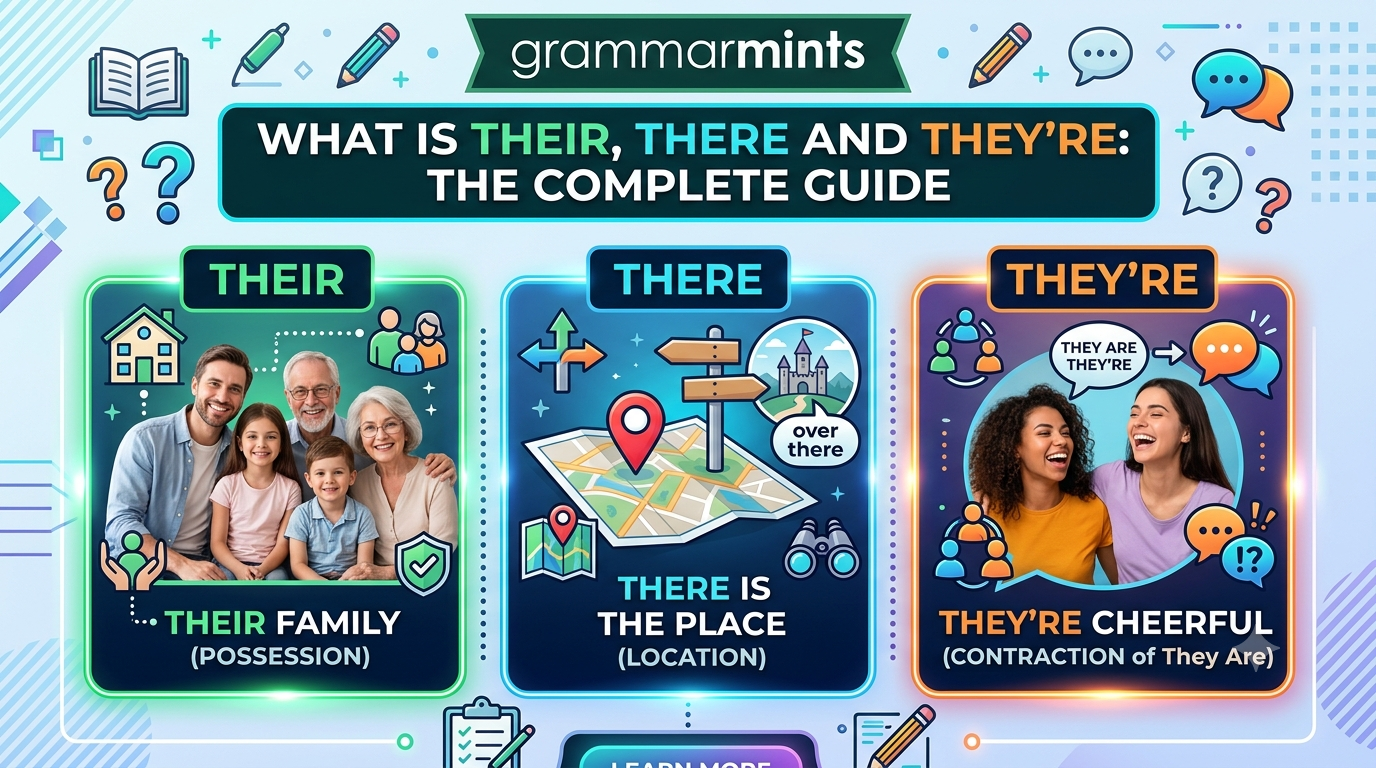
Their, There and They’re The Complete Guide
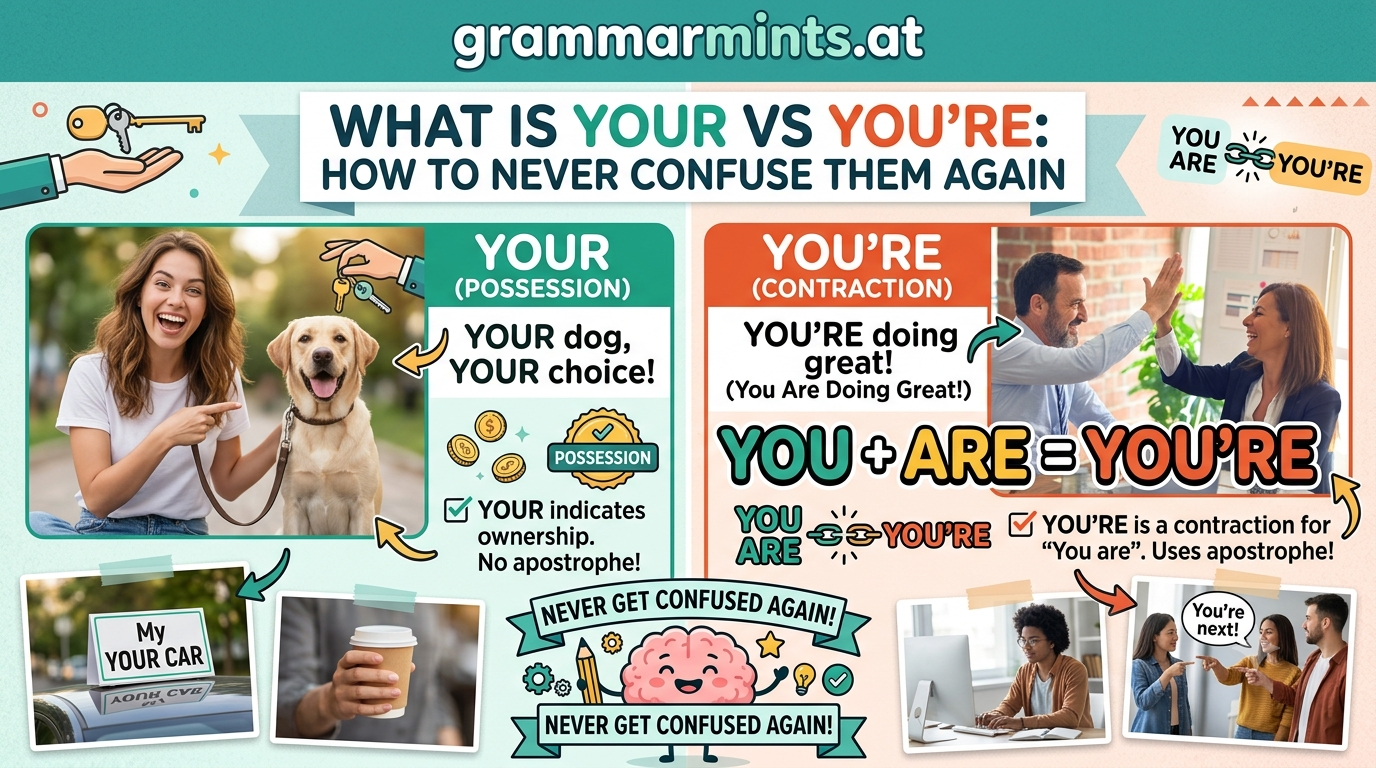
TL;DR: “Your” shows ownership (your phone, your idea), while “you’re” is short for “you are” (you’re welcome, you’re right). If you can swap the word for “you are” and the sentence still makes sense, use “you’re.” If it doesn’t, use “your.” That single test solves the your you’re difference almost every time.
Why This Tiny Mix-Up Still Trips Up So Many Writers
I have edited newsletters, resumes, and client emails for close to two decades, and this is still the single most common flag I raise in first drafts. It is not a sign of poor intelligence at all. Both words are homophones, meaning they sound identical, so your brain has to lean on spelling rules instead of sound to get it right.
Research backs up how widespread this really is. A Tidio-commissioned survey of 1,839 online readers found that over 92% of respondents could spot a grammar error in a sample sentence, and 85% rated common mix-ups like this one as irritating or highly irritating. In other words, readers notice, even when they cannot always explain the rule themselves.
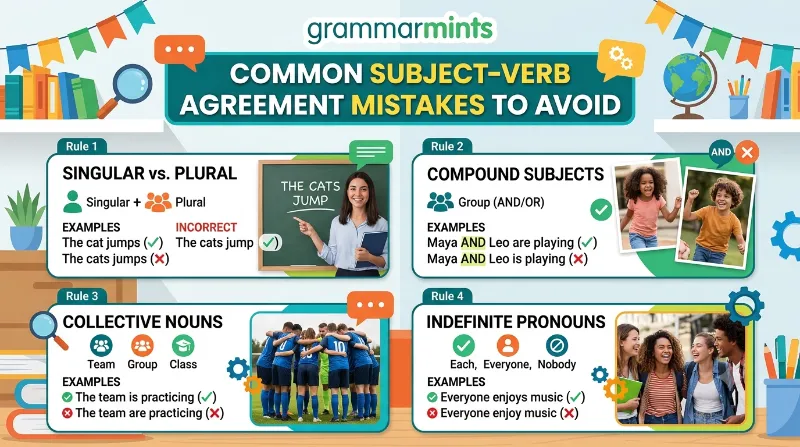
Common Subject Verb Agreement Mistakes to Avoid
Who vs Whom A Simple Trick to Get It Right
Meanwhile, workplace stakes have quietly gone up. A 2023 hiring study comparing identical resumes found that the version with scattered writing errors saw an 18.5 percentage point drop in interview requests, even though the candidates were equally qualified on paper. A single “your welcome” in a cover letter will not sink an application by itself, but it adds to a pile of small doubts a hiring manager may not even realize they are forming.
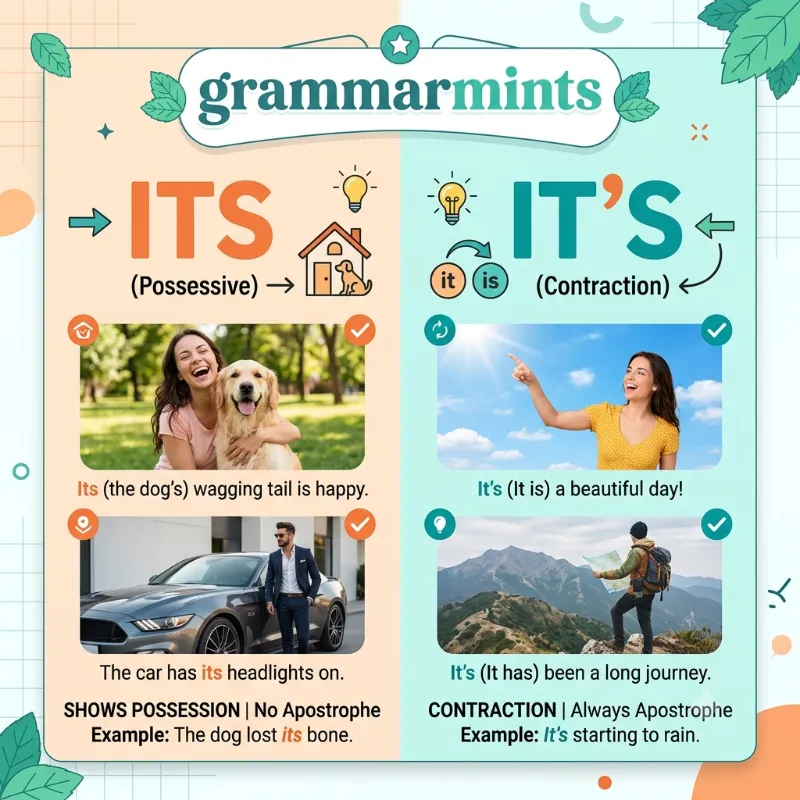
Its vs It’s Simple Rules to Remember the Difference
A Quick Story From The Editing Desk
A few years back, a marketing coordinator I worked with sent a product launch email to roughly 40,000 subscribers with the subject line “Your Going To Love This.” The email still performed reasonably well, since the offer itself was strong. However, the reply inbox filled with corrections from readers within the first hour, and the brand had to send a quiet follow-up newsletter days later with the fix. That single apostrophe, or the missing one, cost the team real time and a bit of credibility.
Then vs Than Understanding the Difference
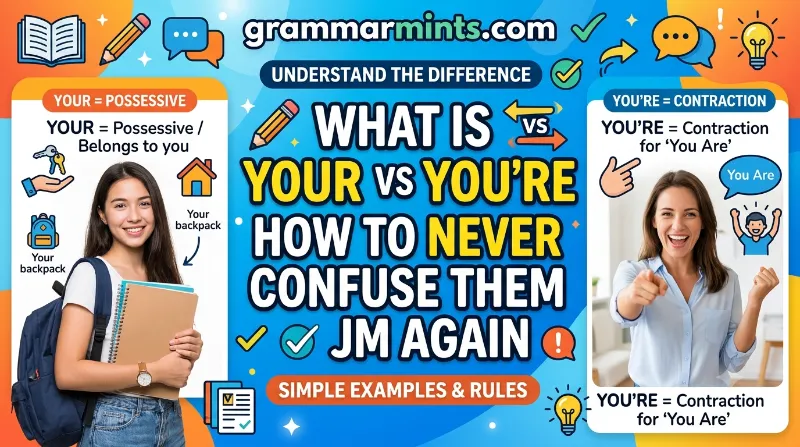
Your vs You’re: What Actually Separates Them?
At the core, this comes down to two completely different jobs. Your points to ownership, while you’re points to an action or state of being. Once that distinction clicks, the your vs you’re confusion tends to disappear for good.
Lay vs Lie The Confusing Verbs Explained
- Your is a possessive adjective. It always sits in front of a noun and tells you who owns something.
- You’re is a contraction. It always stands in for “you are” and usually comes before a verb ending in -ing or an adjective.
Here is the shortest possible version of the rule: if a thing follows the word, reach for “your.” If an action or description follows, reach for “you’re.”
What Is “Your”? A Simple Breakdown
Definition and Spelling
“Your” is spelled Y-O-U-R, with no apostrophe anywhere in the word. It functions as a possessive adjective, meaning it describes something that belongs to the person you are speaking to. Grammar authorities such as the MLA Style Center describe it plainly as a word used to show possession or relation.
“Your” in Real Sentences
Notice how a noun always follows the word in each example below:
- Is this your laptop on the desk?
- I really liked your presentation yesterday.
- What is your favorite restaurant in Chicago?
- Please bring your ID to the interview on Monday.
If you can mentally replace the word with a name (“Sarah’s laptop,” “Sarah’s presentation”), you are dealing with possession, and “your” is correct.
What Does “You’re” Mean? A Simple Breakdown
Definition and Spelling
“You’re” is a contraction of “you” and “are,” with the apostrophe standing in for the missing letter. Because it is short for a full verb phrase, a description or an action word usually comes right after it. The Oxford International style guide notes that this small apostrophe is the entire difference between the two words, yet it changes the meaning completely.
“You’re” in Real Sentences
- You’re doing a fantastic job on this project.
- I think you’re going to enjoy Paris in October.
- You’re already 10 minutes late for the 9 a.m. call.
- If you’re free this weekend, let’s grab coffee.
Every sentence above still makes sense if you swap in “you are” instead. That substitution test is the fastest way to check your work before hitting send.
When to Use Your or You’re: The One Trick That Always Works
Knowing when to use your or you’re does not require memorizing grammar terminology. It only requires one habit: pause for two seconds and mentally replace the word with “you are.”
- If the sentence still makes sense, use you’re.
- If the sentence sounds strange or broken, use your.
Let’s test it on a tricky real example: “Check email before the meeting.” Swap in “you are”: “Check you are email before the meeting.” That sentence falls apart instantly, so the correct word has to be your.
Now try: “I hope ready for this.” Swap in “you are”: “I hope you are ready for this.” That sentence works perfectly, so you’re is correct.
This single test, sometimes called the substitution trick, is taught by nearly every major English style authority, including the Kaplan International language team, because it removes the guesswork entirely.
Your vs You’re Examples: Common Mistakes And Fixes
Seeing wrong and right versions side by side makes the pattern stick faster than any rule ever could. Below are some of the your vs youre examples I see most often in real client work, pulled from actual emails, captions, and drafts over the years.
| Wrong | Correct | Why |
|---|---|---|
| Your welcome. | You’re welcome. | Short for “you are welcome.” |
| Your going to love this. | You’re going to love this. | Action word follows, so use the contraction. |
| I love you’re new haircut. | I love your new haircut. | A noun (haircut) follows, so use the possessive. |
| Your such a great friend. | You’re such a great friend. | Swap test: “You are such a great friend” works. |
| Is this you’re car? | Is this your car? | Ownership of the car, not an action. |
A quick scroll through any comment section on social platforms shows this mistake dozens of times a day, since fast typing and autocorrect rarely catch it. Even so, catching it yourself takes less than five seconds once the substitution habit becomes automatic.
The Data Behind the Mistake: Why It Matters More Than You Think
Grammar slip-ups used to feel like a minor personal quirk, but the numbers tell a different story today. The table below pulls together some of the most cited figures on how writing errors, including homophone mix-ups like this one, shape real outcomes.
| Context | Reported Finding | Year |
|---|---|---|
| Reader perception of grammar mistakes | 85% rate common mistakes as irritating or highly irritating | 2024 survey, Tidio |
| Hiring and resumes | 18.5 percentage point drop in interview callbacks for error-filled resumes | 2023 |
| Company or brand trust | Large majority of readers say mistakes shape their opinion of a business | Ongoing consumer surveys |
| English learner errors | Homophone confusion (your/you’re, its/it’s) sits among the top error categories worldwide | Cambridge English Corpus research |
Looking at this table, one pattern stands out clearly: readers judge writing quality within seconds, often before they consciously register why something feels off. A missing apostrophe rarely ends a relationship or a sale on its own, but it quietly chips away at trust every single time it appears.
First-Hand Observation From Client Work
Over roughly 20 years of freelance editing, I have noticed that the your/you’re mistake shows up most often in three specific places: LinkedIn comments, customer service email templates, and internal Slack messages that later get copied into official documents. Slack drafts especially tend to leak into press releases and client decks when teams move fast, so a five-second proofread before copying text out of a chat window prevents a surprising number of public slip-ups.
A Simple Step-By-Step Self-Check System
Building a habit beats memorizing a rulebook, so here is a short routine you can run through in under a minute before sending anything important.
- Read the sentence out loud. Your ear often catches an odd rhythm that your eyes glide past on a screen.
- Find the word right after “your” or “you’re.” A noun signals “your,” while a verb or adjective signals “you’re.”
- Run the substitution test. Swap in “you are” and see whether the sentence still holds together.
- Search your document for both spellings. Use your word processor’s find tool to jump to every instance and double-check each one.
- Read the final version one more time. A second pass, even a quick one, catches nearly everything the first pass missed.
This routine takes seconds once it becomes automatic, and it works whether you are drafting a college essay, a client proposal, or a quick text message. Many professional editors, myself included, still run through this exact checklist on longer documents, just at a larger scale.
Regional Notes: Does This Change Between the US and Europe?
Readers across the United States and Europe follow the exact same rule here, since this particular mistake has nothing to do with regional spelling differences. Unlike “color” versus “colour,” there is no accepted variant of “your” or “you’re” anywhere in standard English. That makes this one of the rare grammar rules that stays completely consistent no matter which side of the Atlantic your audience sits on.
- American style guides, British style guides, and international ESL programs all teach the identical substitution test.
- The apostrophe rule for contractions does not shift between American and British English, so “you’re” is always the contracted form of “you are” in both systems.
- Formal writing in both regions treats “your welcome” as an error, not a regional spelling choice.
For a wider look at the handful of rules that do shift between American and European English, our grammar fundamentals guide breaks down the real differences, like collective noun agreement and punctuation placement around quotation marks.
Why This Belongs on Your Personal Editing Checklist
This single mix-up is only one entry on a much longer list of small errors that quietly shape how readers judge your writing. If you want the fuller picture, our complete guide to common grammar mistakes walks through the other frequent offenders, including comma splices, dangling modifiers, and subject-verb agreement slips.
Building one solid habit, like the substitution test above, tends to spill over into cleaner writing everywhere else too. Most of the writers I have coached who fixed this one issue found themselves catching two or three other small errors along the way, simply because they had started reading their own work more slowly.
Frequently Asked Questions
Is it “your welcome” or “you’re welcome”?
The correct phrase is always “you’re welcome,” since it is short for “you are welcome.” “Your welcome” would only be correct in an unusual sentence like “Your welcome speech was wonderful.”
Why do your and you’re sound the same but mean different things?
They are homophones, which means they share identical pronunciation despite having completely different spellings and functions. English has many such pairs, including “their/there/they’re” and “its/it’s,” and they all rely on spelling rather than sound to carry meaning.
What is the fastest way to check which word to use?
Replace the word with “you are” and reread the sentence. If it still makes sense, “you’re” is correct; if it sounds broken, “your” is the right choice.
Do native English speakers really make this mistake too?
Yes, and often more than English learners, mainly because native speakers tend to type quickly and skip proofreading. Autocorrect tools do not always catch this error either, since both spellings are valid English words on their own.
Does this rule change in British or European English?
No, the your vs you’re rule is identical across American, British, and other regional forms of English. Only spelling conventions like “color” versus “colour” shift by region, not homophone rules like this one.
Conclusion
Mixing up your and you’re is one of the easiest habits to break once the underlying logic clicks into place. Remember the core test: if “you are” fits naturally, write “you’re,” and if the sentence is about ownership, write “your.” Give yourself the extra two seconds to run that substitution check, especially in emails, resumes, and anything public-facing, since the data shows readers really do notice. Over time, this small habit becomes automatic, and one less thing stands between your ideas and the readers you are trying to reach.
For more everyday writing fixes like this one, explore the full library of grammar guides on Grammar Mints, where clear explanations meet real, practical examples.
References
- MLA Style Center, “Your and You’re: How to Tell Them Apart”: https://style.mla.org/your-or-youre/
- Oxford International English Schools, “Your and You’re: What’s the Difference and When to Use Them?”: https://www.oxfordinternationalenglish.com/you-and-youre-whats-the-difference-and-when-to-use-them/
- Kaplan International, “Your vs You’re: Grammar Differences”: https://www.kaplaninternational.com/blog/language-tips/your-vs-youre-grammar-differences
- Tidio, consumer grammar-perception survey (1,839 respondents): https://www.tidio.com/blog/common-grammar-mistakes/
- Grammarly, “Your vs. You’re: Definitions and Examples”: https://www.grammarly.com/blog/commonly-confused-words/your-vs-youre/