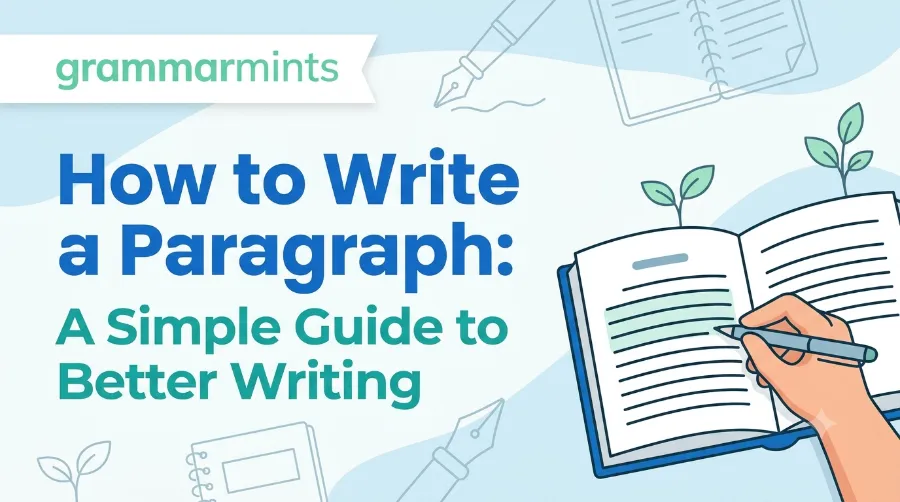
Writing a good paragraph is one of the most important skills in English. Whether you are a student, blogger, business professional, or content creator, knowing how to write a paragraph helps you express ideas clearly. A well-written paragraph keeps readers interested and makes your writing easier to understand.
Many people know grammar rules but still struggle to organize their thoughts. Fortunately, writing a strong paragraph is much easier when you follow a simple structure. This guide explains every step in plain English, provides real examples, and shares practical tips that anyone can use.
If you want to improve essays, emails, blog posts, reports, or social media content, this guide will help you write paragraphs that are logical, engaging, and easy to read.
Quick Facts
| Feature | Why It Matters |
|---|---|
| Topic sentence | Introduces the main idea |
| Supporting sentences | Explain and develop the idea |
| Examples | Make the point easier to understand |
| Closing sentence | Ends the paragraph naturally |
| Transition words | Improve flow between ideas |
What Is a Paragraph?
A paragraph is a group of related sentences that focus on one main idea. Every paragraph should discuss only one topic. When writers jump between different ideas, readers become confused.
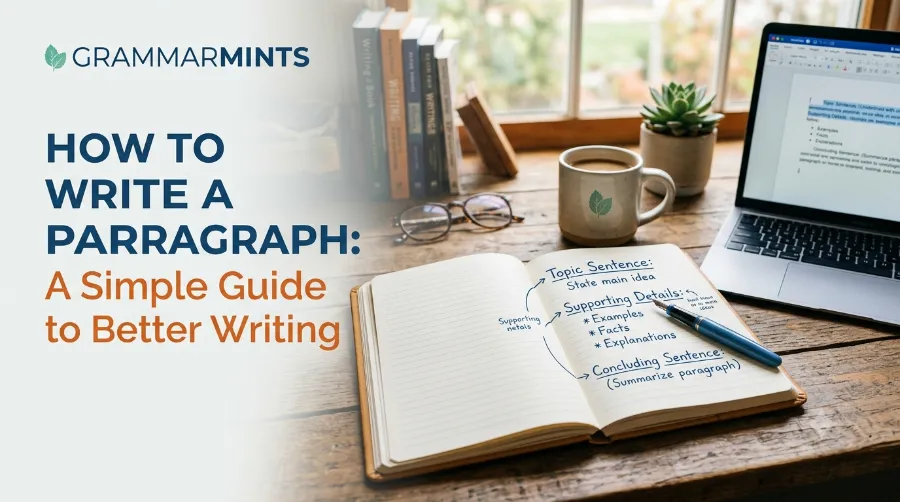
A complete paragraph usually contains:
- One clear topic sentence
- Several supporting sentences
- Real examples or facts
- A concluding sentence
Although there is no perfect length, most paragraphs contain 4 to 8 sentences. Online articles often use shorter paragraphs because they are easier to read on phones and computers.
Why Paragraph Writing Matters
Strong paragraphs improve every type of writing. They make information easier to understand and help readers stay focused.
Good paragraph writing can:
- Improve school assignments
- Make blog posts easier to read
- Increase reader engagement
- Improve business communication
- Strengthen professional reports
- Build confidence in English writing
According to readability studies, shorter paragraphs improve online reading because users tend to scan web pages instead of reading every word. Therefore, organizing information into small sections creates a better reading experience.
Basic Structure of a Good Paragraph
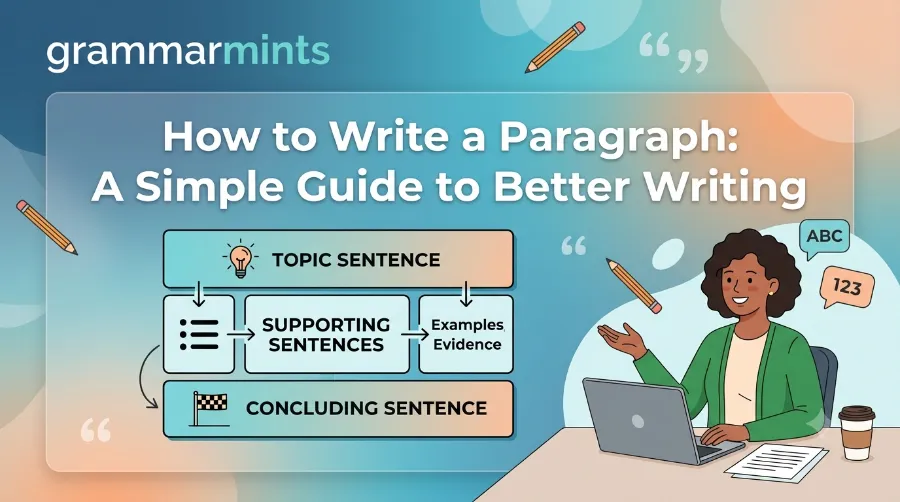
Every effective paragraph follows a simple structure.
1. Topic Sentence
The first sentence introduces the main idea.
Example:
“Daily exercise improves both physical and mental health.”
Readers immediately understand what the paragraph will discuss.
2. Supporting Sentences
Supporting sentences explain the main idea with facts, details, or reasons.
Example:
“Exercise strengthens the heart, improves mood, increases energy levels, and helps reduce stress. It also supports better sleep and overall fitness.”
Each sentence adds useful information.
3. Examples
Examples make ideas easier to understand.
Example:
“For instance, walking for 30 minutes five days each week can improve heart health and lower stress levels.”
Specific examples build trust and improve clarity.
4. Closing Sentence
The final sentence summarizes the paragraph.
Example:
“As a result, regular exercise is one of the easiest ways to improve overall well-being.”
The paragraph now feels complete.
Easy Steps to Write an Effective Paragraph
Follow these simple steps every time you write.
Step 1: Choose One Main Idea
Start with one clear topic.
Instead of discussing several ideas, focus on only one.
For example:
Topic: Benefits of reading books
Do not suddenly discuss television or sports in the same paragraph.
Step 2: Write a Strong Opening Sentence
Your opening sentence should clearly introduce the topic.
Weak example:
“Books are interesting.”
Better example:
“Reading books every day improves vocabulary and critical thinking skills.”
The second sentence immediately tells readers what to expect.
Step 3: Add Supporting Details
Explain your idea with useful information.
Supporting details may include:
- Facts
- Statistics
- Personal experiences
- Expert opinions
- Examples
Each supporting sentence should relate directly to the topic sentence.
Step 4: Use Transition Words
Transition words connect ideas smoothly.
Some useful transitions include:
- First
- Next
- Also
- However
- Therefore
- In addition
- For example
- As a result
- Finally
- Meanwhile
Example:
“Reading improves vocabulary. In addition, it strengthens memory and concentration.”
These words improve readability and help readers follow your ideas.
Common Paragraph Types
Different situations require different paragraph styles.
Descriptive Paragraph
A descriptive paragraph explains what something looks, sounds, feels, smells, or tastes like.
Example:
“The beach was peaceful during sunrise. Gentle waves reached the shore while colorful clouds filled the sky.”
Narrative Paragraph
A narrative paragraph tells a short story.
Example:
“Last summer, I visited Scotland for the first time. Every day brought a new adventure, from hiking mountains to exploring historic castles.”
Expository Paragraph
An expository paragraph explains facts or information.
Example:
“Photosynthesis is the process plants use to convert sunlight into energy.”
Persuasive Paragraph
A persuasive paragraph convinces readers.
Example:
“Schools should include financial education because students need practical money management skills before entering adulthood.”
Common Mistakes to Avoid
Many writers repeat the same mistakes. Fortunately, they are easy to fix.
| Mistake | Better Approach |
| Multiple ideas | Focus on one topic |
| Long sentences | Keep sentences concise |
| No examples | Add relevant examples |
| Weak ending | Finish with a conclusion |
| Poor transitions | Use linking words naturally |
| Grammar errors | Proofread carefully |
Example of a Weak Paragraph
“Exercise is important. I like football. Healthy food tastes good. Running is fun. Water is important.”
This paragraph jumps between different ideas. Readers struggle to understand the main point.
Example of a Strong Paragraph
“Regular exercise improves both physical and mental health. It strengthens muscles, increases energy, and supports heart health. In addition, physical activity helps reduce stress and improves sleep quality. For example, walking for just 30 minutes each day can lower the risk of several chronic diseases. Therefore, making exercise part of a daily routine is a simple way to live a healthier life.”
Paragraph Writing Tips for Students and Professionals
Whether you are writing a school essay, a business report, or a blog post, these tips can help you create stronger paragraphs.
Keep One Main Idea
Every paragraph should focus on a single point. If you introduce another idea, start a new paragraph. This simple habit makes your writing easier to follow.
Be Clear and Specific
Choose simple words whenever possible. Instead of adding unnecessary details, explain your ideas directly. Clear writing helps readers understand your message faster.
Support Your Ideas
A strong paragraph does more than state an opinion. It explains why the idea matters by using examples, facts, or reliable information.
For example, instead of writing:
“Exercise is good.”
Write:
“Regular exercise improves heart health, reduces stress, and increases daily energy levels.”
The second version gives readers useful information.
Edit Before Publishing
Even experienced writers edit their work. Read your paragraph aloud to find awkward wording, repeated phrases, or grammar mistakes.
Ask yourself these questions:
- Does every sentence relate to the topic?
- Is the paragraph easy to understand?
- Have I used transition words naturally?
- Does the paragraph end with a clear conclusion?
Paragraph Writing Checklist
Use this checklist before submitting or publishing your work.
| Checklist Item | Yes |
|---|---|
| One clear topic | ✓ |
| Strong topic sentence | ✓ |
| Supporting details | ✓ |
| Relevant example | ✓ |
| Logical order | ✓ |
| Transition words | ✓ |
| Clear concluding sentence | ✓ |
| Grammar checked | ✓ |
Real-Life Example
Imagine you are writing about healthy eating.
Poor Paragraph
“Healthy food is important. Vegetables are green. Fruit tastes good. Water is important. Exercise is fun.”
The ideas do not connect.
Improved Paragraph
“Healthy eating gives your body the nutrients it needs to stay strong. Fresh fruits, vegetables, whole grains, and lean protein provide vitamins and energy. For example, eating vegetables every day may help reduce the risk of several long-term health conditions. Therefore, choosing balanced meals is an important part of a healthy lifestyle.”
The second version stays focused on one idea and flows naturally.
Comparing Weak and Strong Paragraphs
| Feature | Weak Paragraph | Strong Paragraph |
| Main idea | Unclear | Clear |
| Organization | Random | Logical |
| Supporting details | Few | Relevant |
| Examples | Missing | Included |
| Flow | Choppy | Smooth |
| Readability | Low | High |
Best Practices for Better Paragraph Writing
Follow these habits to improve every paragraph you write.
- Decide on one main idea before writing.
- Begin with a clear topic sentence.
- Add two to five supporting sentences.
- Include an example or fact when helpful.
- Use transition words to improve flow.
- Finish with a concluding sentence.
- Proofread for grammar and spelling.
These steps work well for essays, blog posts, emails, reports, and business documents.
Suggested Chart: Recommended Paragraph Structure
| Paragraph Part | Recommended Share |
| Topic sentence | 20% |
| Supporting details | 60% |
| Example or evidence | 15% |
| Conclusion | 5% |
Suggested Chart: Readability Tips
| Writing Habit | Benefit |
| Short paragraphs | Easier to scan on mobile devices |
| Simple vocabulary | Better understanding |
| Active voice | Stronger and clearer writing |
| Transition words | Smoother reading experience |
| Relevant examples | Higher reader engagement |
Frequently Asked Questions
How many sentences should a paragraph have?
Most paragraphs contain between four and eight sentences. However, the ideal length depends on your purpose and audience.
Can a paragraph have only one sentence?
Yes. In creative writing or online content, a single sentence can form a paragraph for emphasis. In academic writing, longer paragraphs are usually expected.
What is the most important part of a paragraph?
The topic sentence is the foundation because it introduces the main idea. Every other sentence should support it.
How can I improve my paragraph writing?
Practice regularly, read high-quality content, use transition words, and revise your work before publishing.
Why are transition words important?
Transition words connect ideas naturally. As a result, readers can follow your thoughts without confusion.
Conclusion
Learning how to organize a paragraph is one of the fastest ways to improve your writing. When you focus on one main idea, support it with clear details, and finish with a strong conclusion, your message becomes easier to understand.
Whether you are writing for school, work, or your own website, practicing these simple techniques will help you create clear, engaging, and professional content. Over time, these habits will make every piece of writing more effective.
Internal Links
- /related-guide/parts-of-speech
- /related-guide/sentence-structure
- /related-guide/common-grammar-mistakes
References
- Purdue Online Writing Lab (OWL): https://owl.purdue.edu/
- Grammarly Writing Handbook: https://www.grammarly.com/blog/
- Cambridge Dictionary Grammar: https://dictionary.cambridge.org/grammar/
- BBC Learning English: https://www.bbc.co.uk/learningenglish