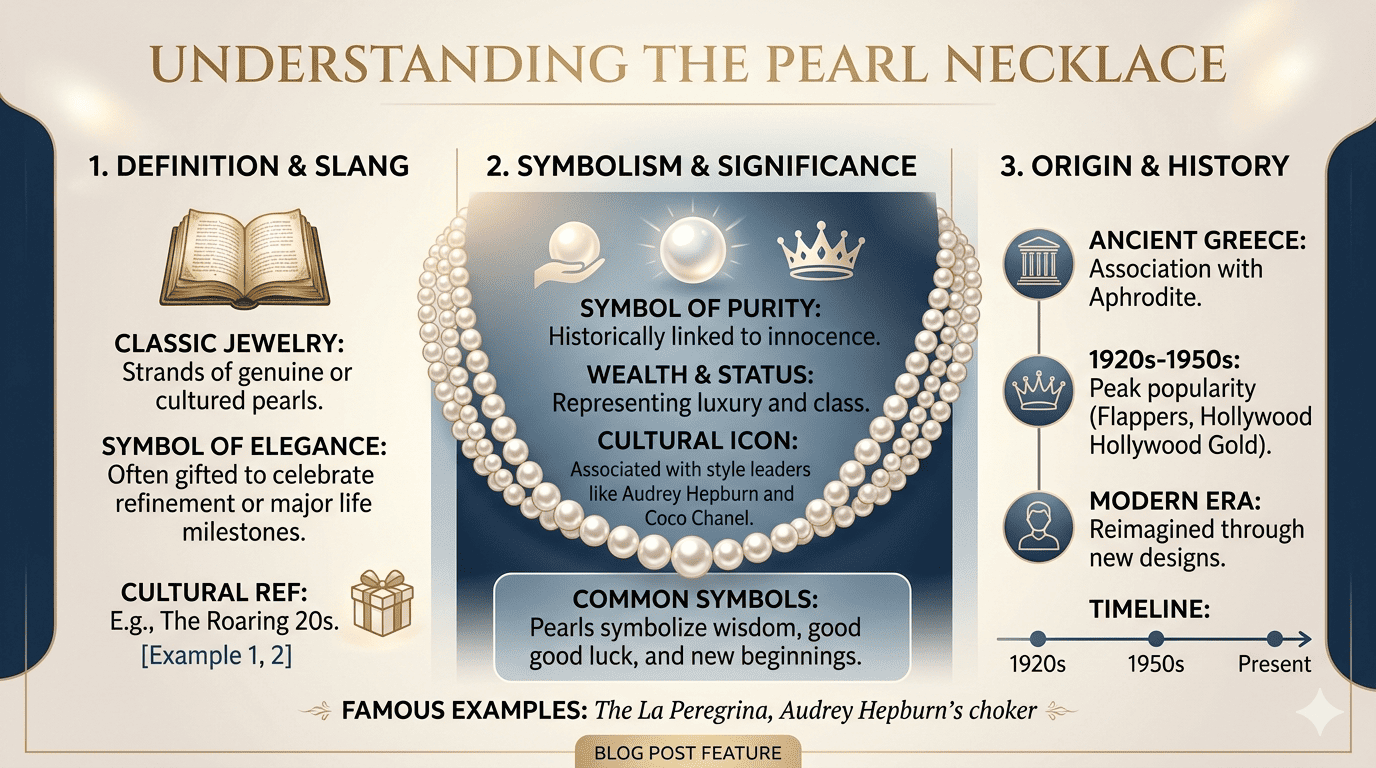
Today, you may notice pearl necklaces at weddings, anniversaries, graduations, and formal celebrations. However, their significance extends well beyond fashion trends. For centuries, families have treasured pearls because they often symbolize meaningful values and lasting memories.A pearl necklace represents far more than a stylish accessory. Across many cultures, people connect pearls with wisdom, purity, elegance, and personal growth.
In addition, many people choose pearl jewelry to mark important milestones. Throughout this guide, you’ll learn what a pearl necklace symbolizes, why it remains popular, and how different traditions interpret its meaning.
What Is a Pearl Necklace?
A pearl necklace consists of pearls strung together on a thread, cord, or chain. Unlike most gemstones, pearls form inside living mollusks.
As a result, people have admired them for centuries. Their natural shine creates a classic appearance that never seems to go out of style. Because of that timeless appeal, pearl necklaces remain popular around the world.
What Does a Pearl Necklace Symbolize?
Although interpretations vary, several symbolic themes appear consistently across cultures.
Most often, people associate pearl necklaces with:
• Purity
• Wisdom
• Elegance
• Honesty
• Loyalty
• Personal growth
Moreover, pearls develop gradually over time. Therefore, many individuals also view them as symbols of patience and maturity.
Purity and Innocence
Among the many meanings linked to pearls, purity ranks near the top. Their clean and refined appearance often reminds people of sincerity and honesty.
For this reason, brides frequently select pearl jewelry for wedding ceremonies. Likewise, families often give pearls during important celebrations. As a result, pearl necklaces have become closely connected with meaningful life moments.
Wisdom and Personal Growth
Unlike symbols of quick success, pearls represent gradual development. Since pearls form over time, many people associate them with wisdom and experience.
Furthermore, their creation process reflects patience and persistence. Consequently, graduates often receive pearl jewelry to celebrate educational achievements. In the same way, pearls can honor personal milestones and accomplishments.
Elegance and Timeless Beauty
Fashion preferences change from year to year. Nevertheless, pearl necklaces continue to maintain their popularity.
Their simple beauty appeals to many generations. In addition, pearls complement a wide variety of clothing styles. Because of this versatility, people wear them for both formal occasions and everyday events.
Love and Lasting Relationships
Beyond beauty, pearl necklaces often carry emotional significance. For example, a grandparent may pass a treasured necklace to a younger family member.
Similarly, spouses sometimes exchange pearl jewelry to mark special anniversaries. As a result, pearls frequently symbolize affection, commitment, and appreciation. Over time, those pieces can become cherished family keepsakes.
Pearl Necklace Meaning in Different Cultures
Different cultures often emphasize different aspects of pearl symbolism.
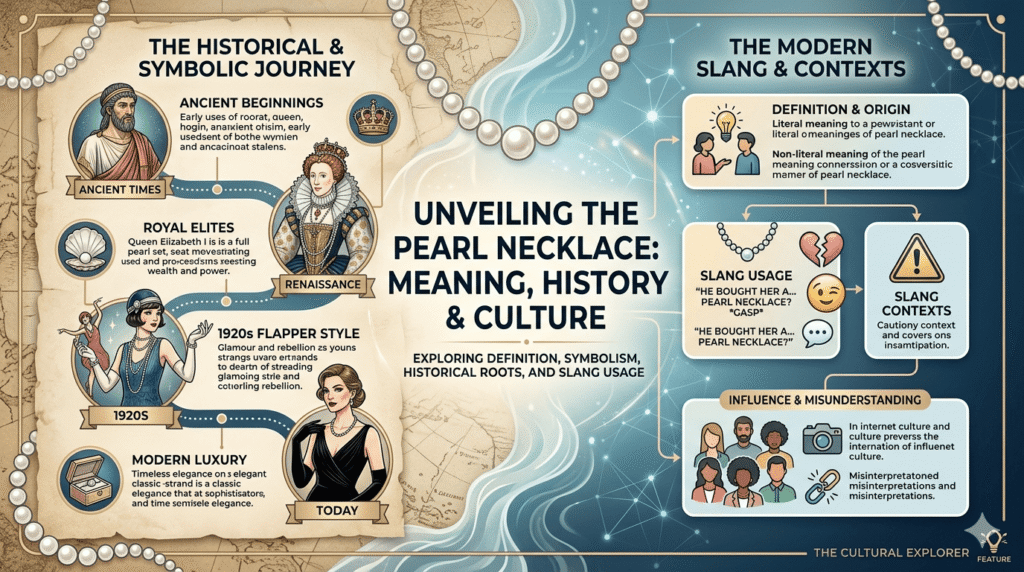
In many Asian traditions, pearls represent wisdom, prosperity, and spiritual growth. Meanwhile, Western traditions commonly connect pearls with elegance and refinement. Throughout history, royal families also collected pearls, and therefore many people continue to associate them with prestige.
Why People Give Pearl Necklaces as Gifts
Pearl necklaces remain popular gifts for major life events. Not only do they look beautiful, but they also carry meaningful symbolism.
For example, people often give pearl necklaces for:
• Weddings
• Graduations
• Birthdays
• Anniversaries
• Mother’s Day
• Retirement celebrations
Because pearls combine beauty with symbolism, they make memorable gifts for many occasions.
Are Pearl Necklaces Considered Good Luck?
In some cultures, pearls symbolize good fortune. As a result, certain people wear pearl jewelry during important events or celebrations.
However, beliefs about luck vary widely. Even so, many individuals view pearls as positive symbols that encourage hope and success. Therefore, pearl jewelry continues to hold special meaning for many wearers.
Pearl Colors and Their Symbolic Meanings
Not all pearls share the same color. Instead, different shades often carry unique symbolic associations.
For instance:
• White pearls purity and sincerity
• Pink pearls affection and kindness
• Golden pearls prosperity and achievement
• Black pearls strength and individuality
• Cream pearls warmth and elegance
Although these interpretations remain popular, personal meaning often matters most. Consequently, two people may view the same pearl necklace differently.
Common Misunderstandings About Pearl Necklaces
Some people assume every pearl necklace carries the exact same meaning. In reality, symbolism often depends on personal experiences and cultural traditions.
Another misconception involves formality. While many people wear pearls at weddings or formal gatherings, others enjoy them as everyday accessories. Therefore, pearl necklaces fit a broader range of situations than many people realize.
Conclusion
A pearl necklace represents much more than jewelry alone. Throughout history, people have connected pearls with purity, wisdom, elegance, and lasting relationships.
Whether you receive one as a gift or choose one for yourself, a pearl necklace can serve as a meaningful reminder of growth, cherished memories, and timeless beauty. Furthermore, its symbolism continues to resonate across generations and cultures.