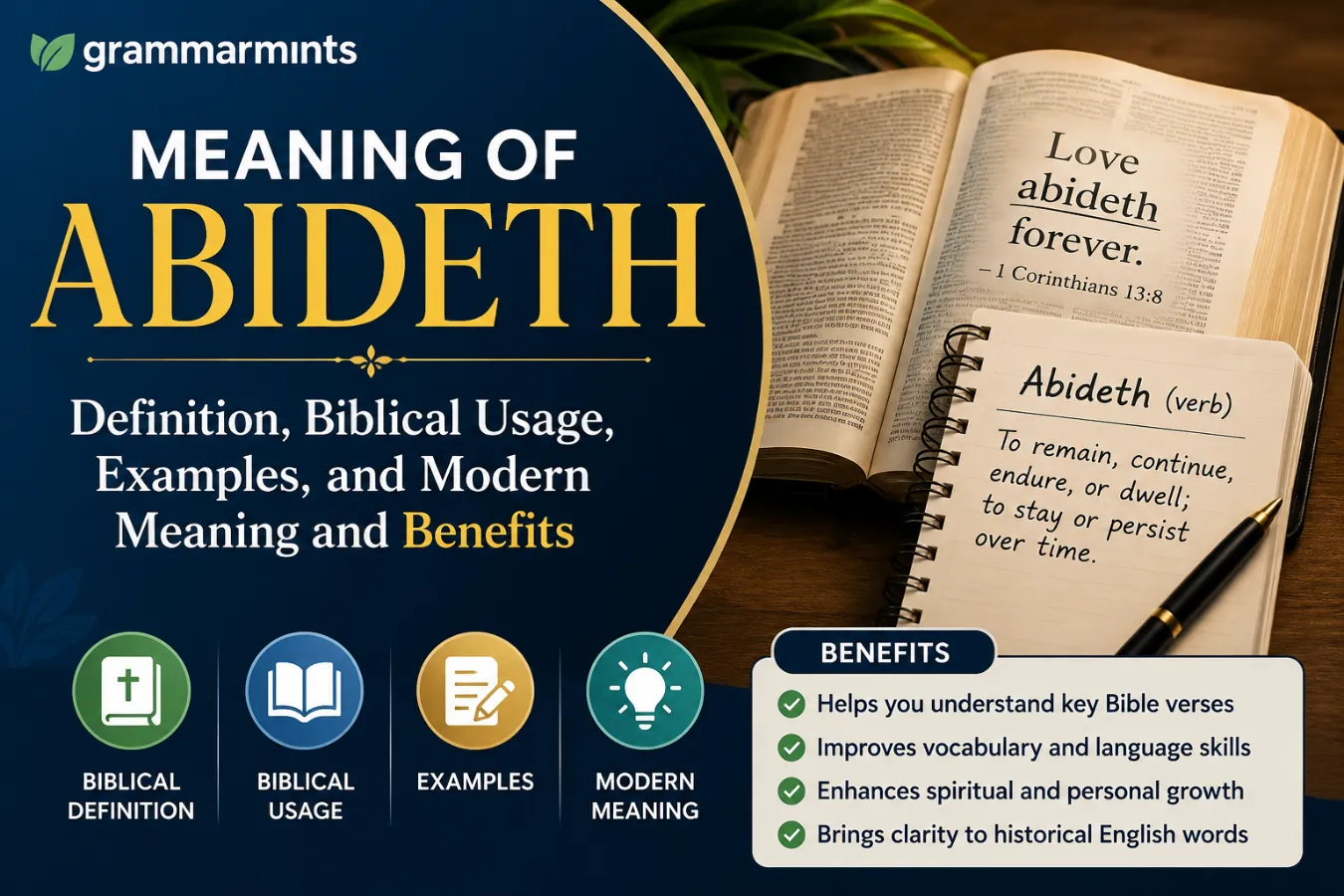
The meaning of abideth often interests Bible readers, language learners, and students of older English. While the word may appear unfamiliar today, it remains common in the King James Bible and other historical writings. Because modern English rarely uses this form, many readers wonder what it actually means.
At first, the term can seem difficult to understand. However, its core meaning is straightforward. In most situations, abideth refers to something that remains, continues, endures, or stays. Moreover, the word often carries a sense of permanence and faithfulness. Therefore, learning its meaning can make many Bible passages easier to understand. Throughout this guide, you will discover its definition, pronunciation, history, examples, and modern equivalents.
What Does Abideth Mean?
Simply put, abideth is an older English form of the verb “abide.” In modern English, people usually say “abides” instead.
Depending on the context, the word can express several related ideas. Most commonly, it means remains, continues, dwells, or endures. As a result, modern translations frequently replace abideth with words that feel more familiar to today’s readers.
For example:
• Love abideth forever.
• Truth abideth despite opposition.
• Hope abideth during difficult seasons.
In each example, the main idea involves continuing over time.
Simple Definition of Abideth
A clear definition helps remove confusion.
Abideth means:
• Remains
• Continues
• Endures
• Persists
• Dwells
• Stays
Although each synonym has a slightly different shade of meaning, all of them point toward continuation. Consequently, the word often appears in passages about lasting faith, enduring truth, and permanent love.
Pronunciation Guide
Many people encounter the word in writing before they hear it spoken. Therefore, pronunciation can become a challenge.
The correct pronunciation is:
uh-BYE-deth
To make it easier:
• A = uh
• Bid = bye
• Eth = deth
Unlike many modern verbs, abideth follows an older grammatical pattern. Nevertheless, most readers learn the pronunciation quickly once they hear it a few times.
History and Origin of Abideth
The word comes from the older verb abide, which has roots in Old English. Historically, English verbs changed their endings more often than they do today.
For centuries, writers used “-eth” endings for third-person singular verbs. Consequently, words such as abideth, loveth, and knoweth appeared regularly in religious and literary texts. Eventually, English grammar evolved, and simpler forms became standard.
Consider these examples:
| Older Form | Modern Form |
|---|---|
| Abideth | Abides |
| Loveth | Loves |
| Knoweth | Knows |
| Speaketh | Speaks |
| Dwelleth | Dwells |
As language changed, modern speakers adopted shorter forms. Nevertheless, older versions survived in scripture and historical literature.
Meaning of Abideth in the Bible
Readers encounter abideth most often in the Bible. However, the exact meaning depends on the verse.
Sometimes the word means “remains.” In other passages, it means “dwells” or “lives within.” Meanwhile, certain verses use it to emphasize endurance or permanence. Because context shapes meaning, examining each verse carefully is important.
Abideth as Remains
Many passages use the word to show that something continues to exist.
Example:
“And now abideth faith, hope, charity.”
In modern language:
“And now remain faith, hope, and charity.”
Therefore, the focus falls on qualities that continue over time.
Abideth as Dwells
Other passages use the word to describe living within something.
Example:
“He that loveth his brother abideth in the light.”
Here, the idea relates to remaining spiritually connected. In addition, the verse emphasizes an ongoing relationship rather than a temporary experience.
Abideth as Endures
Certain verses highlight permanence.
For instance, truth may abideth forever. Similarly, God’s love may abideth through every generation. Thus, the word often points to something lasting and dependable.
Why Understanding Abideth Matters
Older Bible language can feel challenging. Nevertheless, learning a few key terms dramatically improves comprehension.
Once readers understand abideth, many passages become clearer. Furthermore, recognizing similar words helps explain other older expressions. As a result, scripture study becomes more rewarding and less confusing.
Several benefits include:
- Better Bible understanding
- Improved reading confidence
- Stronger vocabulary knowledge
- Easier interpretation of older texts
- Greater appreciation for historical English
Abideth vs Abides
Many readers ask whether abideth and abides mean different things. In reality, the meanings are almost identical.
| Word | Meaning | Usage |
| Abideth | Remains | Historical |
| Abides | Remains | Modern |
Therefore, the primary difference involves style rather than meaning. While modern English prefers abides, older translations frequently use abideth.
Modern Examples of Abideth
Although modern writers rarely use the term, examples still help clarify its meaning.
Consider the following sentences:
• Love abideth through hardship.
• Truth abideth despite criticism.
• Hope abideth when circumstances change.
• Faith abideth during uncertainty.
Likewise, each example highlights endurance and continuation.
Synonyms and Related Words
Several words share similar meanings.
Common synonyms include:
• Remains
• Continues
• Persists
• Endures
• Lasts
• Dwells
• Stays
Even so, context determines which synonym works best. Consequently, no single replacement fits every verse perfectly.
Antonyms of Abideth
Opposite meanings help clarify the concept further.
Common antonyms include:
• Ends
• Ceases
• Leaves
• Departs
• Disappears
• Fades
In contrast to abideth, these words suggest interruption or disappearance rather than continuation.
Common Mistakes
Because the word belongs to older English, misunderstandings occur regularly.
Mistake 1: Assuming It Means Obey
Actually, abideth usually means remains or continues. Therefore, it does not simply mean obedience.
Mistake 2: Treating It as a Noun
Instead, the word functions as a verb. Consequently, it describes an action or state.
Mistake 3: Thinking It Is Modern English
Today, the form appears mainly in scripture and historical writing. Nevertheless, the meaning remains relevant.
Frequently Asked Questions
What is the meaning of abideth in simple English?
Most simply, abideth means remains, continues, or stays.
Is abideth still used today?
Generally, modern English uses “abides.” However, many Bible readers still encounter abideth regularly.
Why does the King James Bible use abideth?
At the time of translation, “-eth” verb endings were common. Therefore, translators used forms such as abideth and loveth.
Is abideth a verb?
Yes. Specifically, it is an older third-person singular form of the verb abide.
What is the modern equivalent of abideth?
Most often, writers replace it with abides, remains, or continues.
Conclusion
The meaning of abideth centers on the ideas of remaining, enduring, dwelling, and continuing. Although the word belongs to older English, its message remains easy to understand once you know the context.
Furthermore, recognizing this term can improve Bible study and historical reading. As a result, future encounters with abideth will feel much more familiar and meaningful.