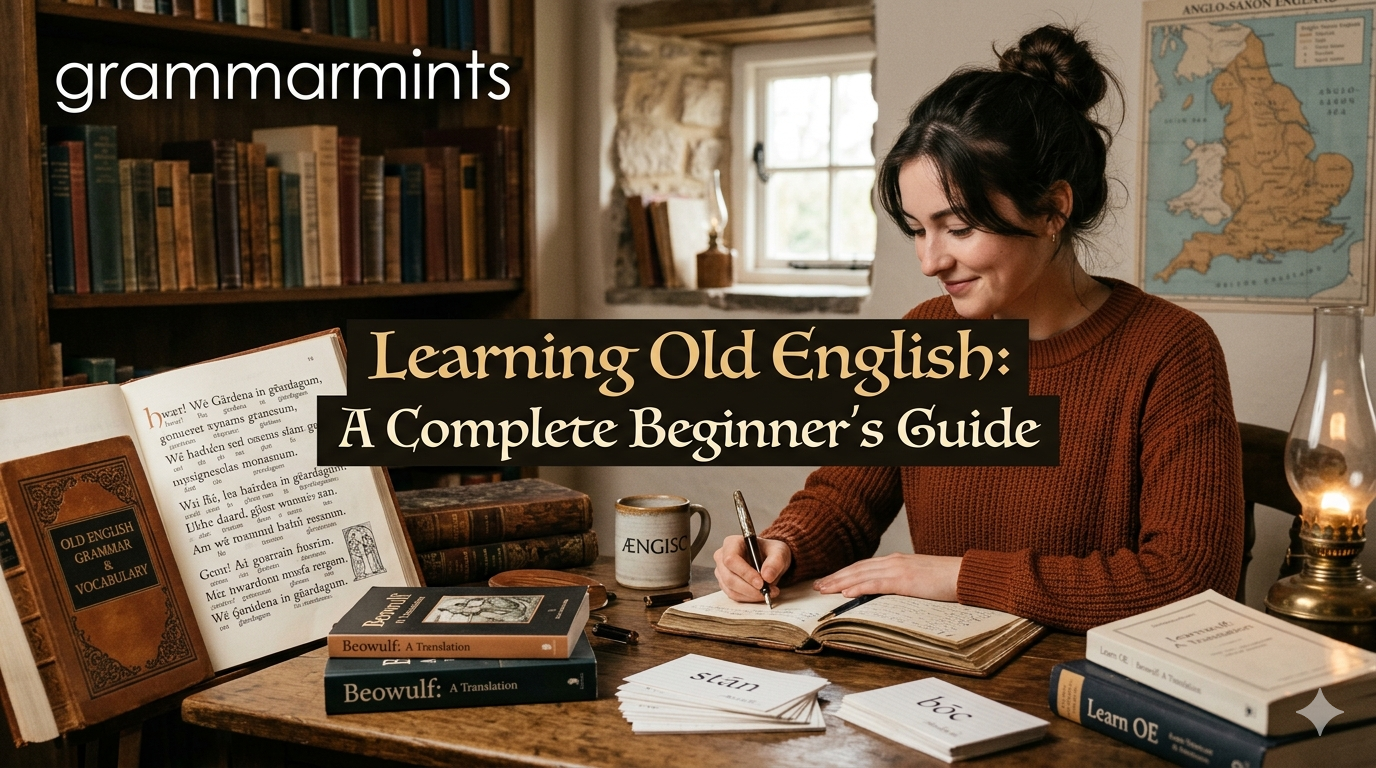
Learning Old English opens a fascinating door into the history of the English language. Many people know modern English, yet few understand how the language sounded and worked more than a thousand years ago. As a result, studying Old English helps learners discover the roots of thousands of modern words.
Today, students, historians, linguists, and literature enthusiasts study Old English to better understand historical texts and cultural traditions. Moreover, the skill provides valuable insights into language development, making it useful for both academic and personal growth.
What Is Old English?
Old English, also called Anglo-Saxon, was spoken in England from approximately 450 AD to 1100 AD. It differs greatly from modern English in vocabulary, grammar, pronunciation, and sentence structure.
For example:
| Modern English | Old English |
|---|---|
| King | Cyning |
| House | Hus |
| Friend | Freond |
| Book | Boc |
Although some words remain recognizable, many others look completely different.
Timeline of English Development
| Period | Years |
| Old English | 450–1100 |
| Middle English | 1100–1500 |
| Early Modern English | 1500–1700 |
| Modern English | 1700–Present |
Therefore, understanding Old English helps learners trace how English evolved over centuries.
Why People Study Old English Today
Many learners wonder whether studying an ancient language is worth the effort. Fortunately, there are several strong reasons.
Academic Research
Universities across the United States and Europe continue offering Old English courses. Students often study medieval literature, linguistics, archaeology, and history through original texts.
Reading Historical Literature
Old English allows readers to explore famous works in their original form.
Examples include:
- Beowulf
- The Anglo-Saxon Chronicle
- Religious manuscripts
- Historical legal documents
Understanding Language Evolution
Furthermore, Old English explains why modern English contains unusual spelling patterns and grammar rules.
Key Features of Old English Grammar
One challenge beginners face involves grammar differences. However, understanding the basics makes the language easier to learn.
Noun Cases
Old English nouns change based on their function within a sentence.
The main cases include:
- Nominative
- Accusative
- Genitive
- Dative
Example:
| Case | Meaning |
| Nominative | Subject |
| Accusative | Direct Object |
| Genitive | Possession |
| Dative | Indirect Object |
Gender System
Unlike modern English, Old English nouns have grammatical gender:
- Masculine
- Feminine
- Neuter
Interestingly, gender does not always match biological sex.
Strong and Weak Verbs
Verbs follow different patterns.
Examples:
| Type | Example |
| Strong | Singan (to sing) |
| Weak | Lufian (to love) |
Consequently, learners must memorize common verb changes.
Common Old English Vocabulary
Building vocabulary remains one of the fastest ways to improve reading skills.
Frequently Used Words
| Old English | Modern English |
| God | Good |
| Mann | Man |
| Wif | Woman |
| Sunne | Sun |
| Modor | Mother |
| Faeder | Father |
| Eorþe | Earth |
| Water | Water |
Many modern English words still show their Old English origins.
How to Start Learning Old English
Beginners often feel overwhelmed at first. Nevertheless, a structured approach makes progress easier.
Step 1: Learn the Alphabet
Old English uses several unique letters:
| Letter | Sound |
| Þ (thorn) | th |
| Ð (eth) | th |
| Æ (ash) | a/e |
Step 2: Build Core Vocabulary
Start with:
- Family words
- Nature words
- Common verbs
- Pronouns
Step 3: Learn Basic Grammar
Focus on:
- Cases
- Verb conjugations
- Pronouns
- Sentence structure
Step 4: Read Simple Texts
Begin with short passages before tackling complex literature.
Best Resources for Learning Old English
Several trusted resources help beginners progress faster.
Recommended Books
| Book | Author |
| Learn Old English with Leofwin | Peter S. Baker |
| Introduction to Old English | Peter S. Baker |
| Reading Old English | Richard Marsden |
Online Resources
Internal Resources
- /related-guide/english-language-history
- /related-guide/language-learning-techniques
- /related-guide/etymology-basics
Old English vs Modern English
Many learners are surprised by the differences.
| Feature | Old English | Modern English |
| Cases | Four major cases | Mostly lost |
| Gender | Three genders | Minimal |
| Vocabulary | Germanic | Mixed origins |
| Word Order | Flexible | More fixed |
| Pronunciation | Very different | Standardized |
As a result, Old English feels closer to German than modern English.
Real-World Example of Language Change
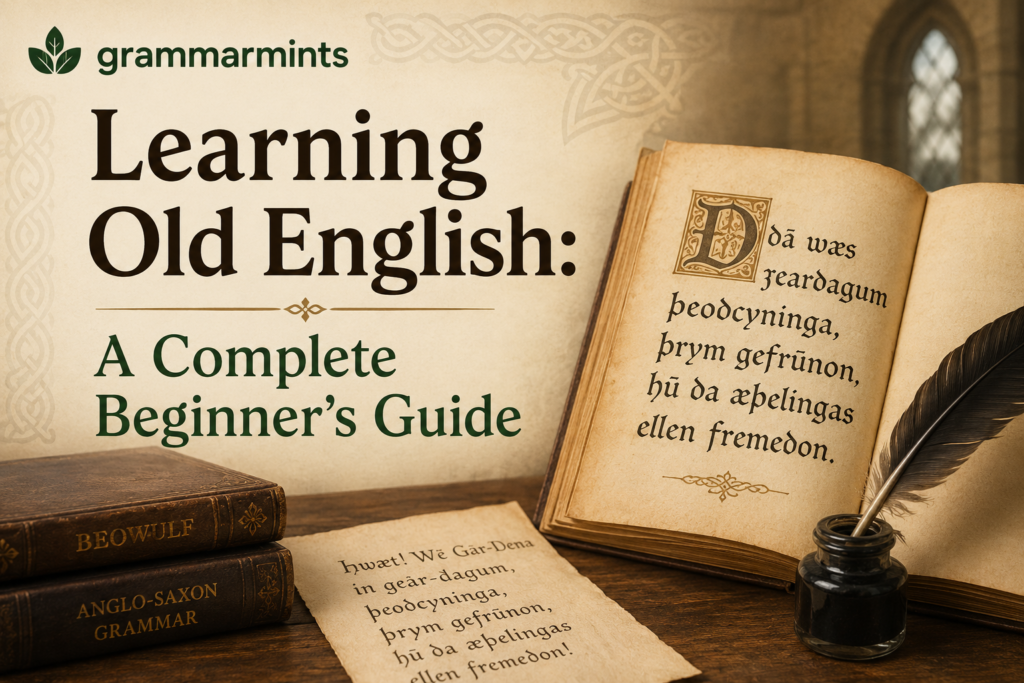
Consider the famous opening line of Beowulf.
Old English:
“Hwæt! We Gardena in geardagum”
Modern Translation:
“Listen! We of the Spear-Danes in days gone by.”
This example demonstrates how dramatically English changed over approximately one thousand years.
Learning Progress Chart
Estimated Hours to Reach Reading Ability
| Stage | Study Hours |
| Beginner | 20–40 |
| Basic Reading | 50–100 |
| Intermediate Reading | 120–200 |
| Literary Reading | 250–400 |
Progress Visualization
Beginner ████
Basic Reading ██████████
Intermediate ████████████████
Advanced █████████████████████████
Challenges Beginners Face
Most learners experience similar obstacles.
Difficult Grammar
Old English grammar contains many inflections. Therefore, regular practice becomes essential.
Unfamiliar Vocabulary
Thousands of words differ from modern English. However, repetition gradually improves recognition.
Pronunciation
Ancient sounds may seem unusual at first. Nevertheless, listening to reconstructed pronunciations helps considerably.
Effective Study Strategies
The following techniques consistently produce better results.
Daily Learning Routine
- Study vocabulary for 15 minutes.
- Review grammar for 15 minutes.
- Read a short text for 20 minutes.
- Practice translation for 10 minutes.
Memory Techniques
- Create flashcards.
- Use spaced repetition.
- Read aloud regularly.
- Keep a vocabulary notebook.
Consequently, learners retain information more effectively.
Latest Interest in Old English Studies
Interest in historical linguistics continues growing. Universities in the United States, the United Kingdom, Germany, and Scandinavia have expanded medieval language programs in recent years.
Additionally, digital archives now provide free access to many Old English manuscripts. This increased accessibility allows independent learners to study authentic texts from anywhere in the world.
Frequently Asked Questions
Is Old English the same as Shakespearean English?
No. Shakespeare wrote Early Modern English, which is much closer to today’s English than Old English.
How long does it take to learn Old English?
Most learners can begin reading simple texts within 50–100 hours of focused study.
Is Old English useful today?
Yes. It helps with historical research, literature studies, linguistics, and vocabulary development.
Can beginners learn Old English without a teacher?
Yes. Many excellent books and online resources support self-study.
What is the hardest part of Old English?
Grammar and vocabulary usually present the biggest challenges.
Conclusion
Learning Old English offers far more than historical knowledge. It reveals how modern English developed, strengthens vocabulary awareness, and provides direct access to some of Europe’s most important literary works. Although the language requires patience and consistent practice, beginners can make steady progress with the right resources and study methods. Over time, the ability to read original Anglo-Saxon texts becomes both rewarding and intellectually enriching.