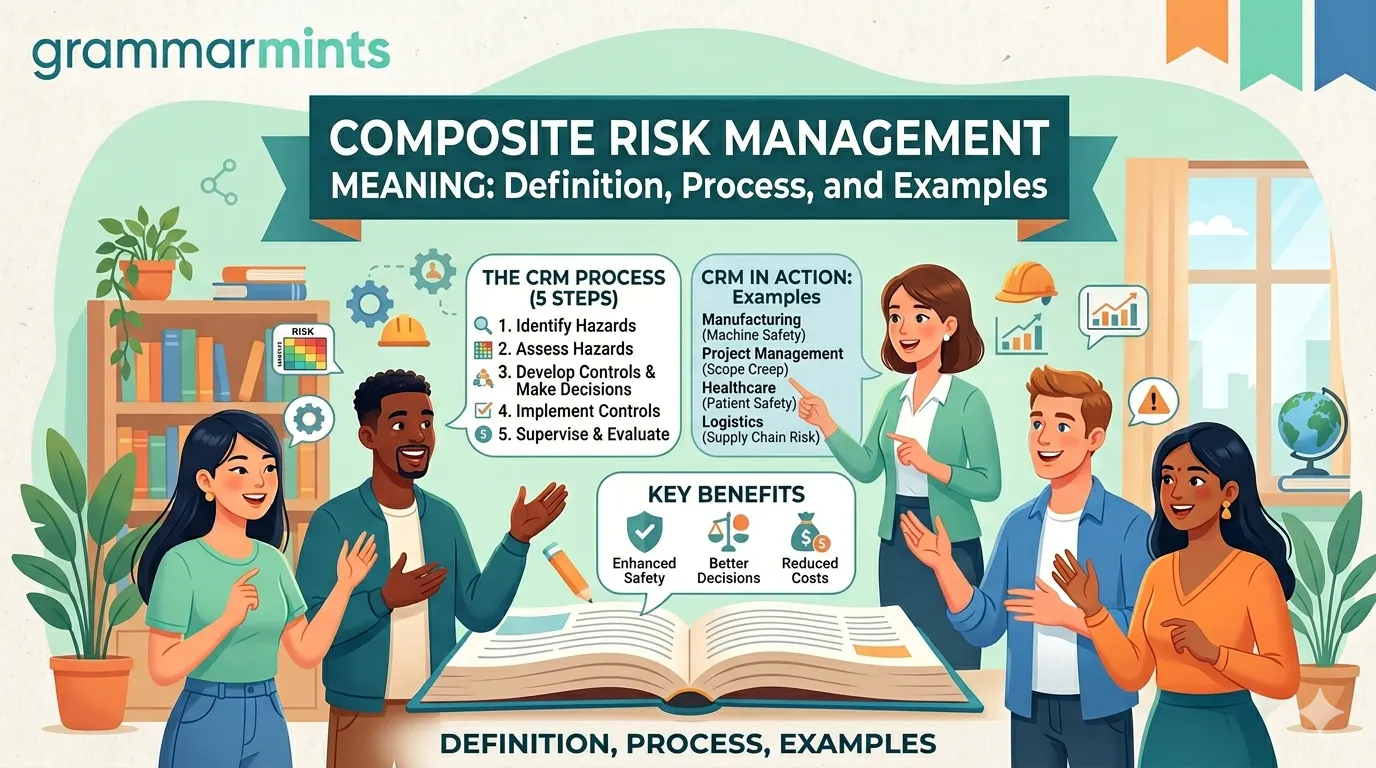
The term composite risk management meaning often appears in military training, workplace safety programs, project planning, and business operations. Although the phrase may sound technical, the idea behind it is straightforward. Organizations use composite risk management to identify hazards, evaluate possible dangers, and reduce risk before problems occur.
Today, many leaders rely on this process because it supports safer and smarter decisions. Moreover, it helps teams protect people, equipment, and resources while achieving their goals. Throughout this guide, you’ll learn what composite risk management means, how the process works, where it is used, and why it remains an important planning tool.
Quick Answer
Composite risk management is a structured process used to identify hazards, assess risk levels, implement controls, and monitor results. As a result, organizations can reduce unnecessary risks while still accomplishing their objectives.
What Does Composite Risk Management Mean?
In simple terms, composite risk management is a method for recognizing potential dangers before they create problems. Instead of reacting after an incident occurs, decision-makers evaluate risks in advance.
Furthermore, the process combines multiple factors when assessing a situation. Because of this broader approach, organizations gain a clearer understanding of possible threats and their impact.
Definition in Plain English
A simple definition of composite risk management is:
A systematic process used to identify hazards, evaluate risks, and apply controls that reduce potential harm.
In other words, it helps people think ahead. Consequently, they can make better decisions and avoid preventable mistakes.

Part of Speech
The phrase composite risk management functions as a noun phrase. Specifically, it names a formal process or system.
Examples include:
• Composite risk management improved workplace safety.
• The organization adopted composite risk management procedures.
• Effective composite risk management reduced operational risks.
Why Composite Risk Management Matters
Every activity carries some level of risk. However, unmanaged risks often lead to accidents, delays, injuries, or financial losses.
By following a structured approach, organizations can identify concerns early. In addition, they can implement solutions before those concerns become serious problems. Therefore, composite risk management supports both safety and efficiency.
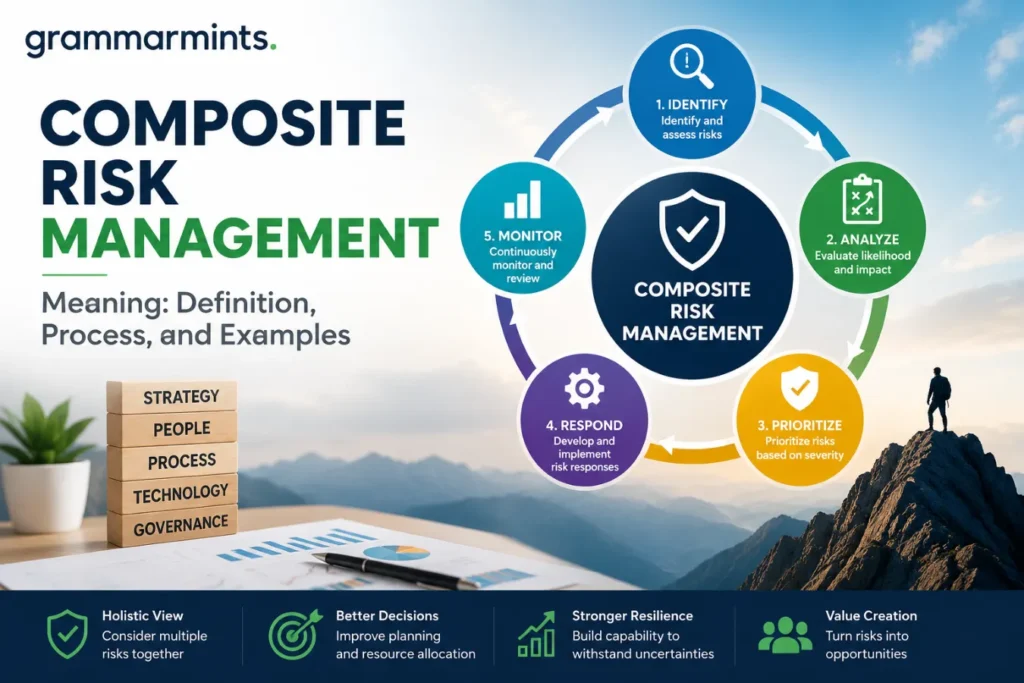
How Composite Risk Management Works
Rather than relying on assumptions, this process follows a series of organized steps. Each step builds on the previous one and contributes to informed decision-making.
As conditions change, organizations can reassess risks and adjust their controls accordingly. Consequently, risk management becomes an ongoing activity rather than a one-time task.
The Five Steps of Composite Risk Management
1. Identify Hazards
First, identify anything that could cause harm or disrupt operations.
Common hazards include:
• Equipment failures
• Severe weather
• Human error
• Lack of training
• Unsafe working conditions
2. Assess Risks
Next, evaluate how likely each hazard is to occur and how serious the consequences could be.
For example, a highly probable hazard with severe consequences requires immediate attention. Meanwhile, lower-risk hazards may need fewer controls.
3. Develop Controls and Make Decisions
After assessing the risks, determine which actions can reduce them.
Possible controls include:
• Additional training
• Protective equipment
• Updated procedures
• Better supervision
Once controls are identified, leaders decide whether the remaining risk is acceptable.
4. Implement Controls
At this stage, the selected controls are put into practice.
For instance, a company may introduce safety training before employees begin a high-risk task. Likewise, managers may establish new inspection procedures.
5. Supervise and Evaluate
Finally, monitor the effectiveness of the controls.
If conditions change, new hazards may appear. Therefore, organizations should review and update their risk assessments regularly.
Common Areas Where Composite Risk Management Is Used
Although the process originated in operational environments, its principles apply in many settings.
Military Operations
Military leaders frequently use composite risk management when planning missions, training exercises, and daily activities.
Workplace Safety
Many businesses rely on risk management systems to reduce injuries and improve safety standards.
Construction Projects
Construction sites often involve heavy equipment, changing conditions, and multiple hazards. Consequently, ongoing risk assessment is essential.
Business Planning
Organizations use risk management when launching products, entering new markets, or implementing major changes.
Event Management
Large events may involve crowd safety, weather concerns, and logistical challenges. Therefore, careful planning becomes necessary.
Real-World Examples
Example 1: Outdoor Training Event
A training team plans an outdoor activity during the summer.
Because high temperatures increase the risk of dehydration, organizers provide water stations and schedule regular breaks. As a result, participants remain safer throughout the event.
Example 2: Construction Site
Workers operate heavy machinery on an active construction project.
Before work begins, managers inspect equipment and provide safety briefings. Consequently, the likelihood of accidents decreases.
Example 3: Business Project
A company prepares to launch a new service.
Since technical issues could delay the launch, the team creates backup plans and conducts additional testing. Therefore, potential disruptions become easier to manage.
Benefits of Composite Risk Management
Organizations gain several advantages from using this process.
• Improves decision-making
• Reduces accidents
• Protects resources
• Increases operational efficiency
• Encourages proactive planning
• Strengthens safety awareness
Additionally, risk management helps organizations respond more effectively when unexpected challenges arise.
Common Mistakes to Avoid
Even a structured process can fail when important steps are overlooked.
Ignoring Minor Hazards
Small issues sometimes develop into major problems. Therefore, every hazard deserves proper evaluation.
Failing to Review Controls
Risk conditions often change over time. Consequently, controls should be reviewed regularly.
Poor Communication
Without clear communication, employees may misunderstand procedures. As a result, risks can increase.
Inadequate Training
Training plays a critical role in risk reduction. Therefore, organizations should ensure that employees understand their responsibilities.
Composite Risk Management vs General Risk Management
| Context | Best Choice | Why |
|---|---|---|
| Operational planning | Composite Risk Management | Uses a structured hazard assessment process |
| Broad organizational planning | Risk Management | Covers wider business risks |
| Safety-focused activities | Composite Risk Management | Emphasizes hazard identification and controls |
Related Terms
Several related terms often appear alongside composite risk management.
• Risk assessment
• Hazard analysis
• Safety management
• Operational planning
• Risk control
Although these concepts are connected, each serves a specific purpose.
Synonyms and Antonyms
Similar Terms
While no exact synonym exists, closely related terms include:
• Risk management
• Hazard management
• Safety planning
• Risk assessment process
Opposite Concepts
There is no perfect antonym. However, these ideas represent the opposite approach:
• Risk neglect
• Unsafe planning
• Uncontrolled exposure to hazards
Frequently Asked Questions
What is composite risk management in simple terms?
It is a process used to identify hazards, assess risks, and reduce potential harm before taking action.
Why is composite risk management important?
Because it helps organizations make informed decisions, improve safety, and prevent avoidable losses.
What are the five steps of composite risk management?
The process includes identifying hazards, assessing risks, developing controls, implementing controls, and evaluating results.
Is composite risk management only used in the military?
No. Businesses, schools, construction companies, and event planners also use similar risk management methods.
Does composite risk management eliminate all risk?
No. Instead, it reduces risk to a level that organizations consider acceptable.
Conclusion
Understanding the composite risk management meaning helps individuals and organizations make safer decisions. By identifying hazards early and applying effective controls, teams can reduce risk while achieving their objectives.
Whether you work in safety, planning, or operations, learning this process can improve both decision-making and outcomes.