

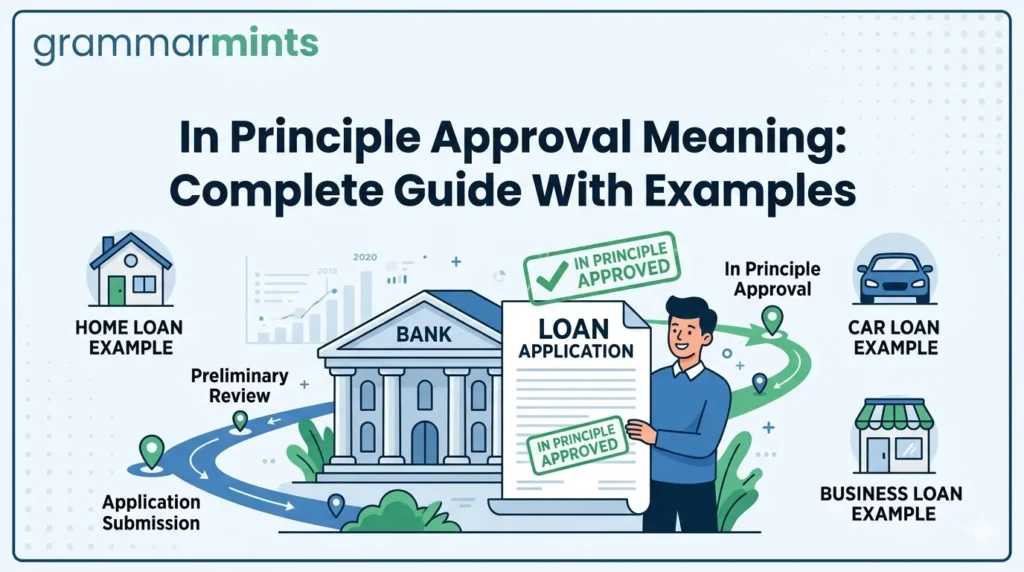
The in principle approval meaning refers to a preliminary decision made by a lender, bank, employer, immigration authority, or another organization that indicates an application is likely to be approved based on initial information.
In simple words, it is not the final approval. Instead, it shows that the organization has reviewed basic details and sees no major issues at the early stage.
For example, many mortgage lenders in the United States and Europe offer an Approval in Principle (AIP) before conducting a complete review. As a result, applicants gain confidence before making important financial decisions.
Because the final review is still pending, additional checks and documentation remain necessary.
Why Approval in Principle Is Important
Approval in principle provides an early indication of success. Therefore, applicants can move forward with greater confidence.
Key benefits include:
- Better understanding of borrowing power
- Increased confidence during negotiations
- Faster decision-making
- Early identification of credit issues
- Improved planning for future expenses
For homebuyers, this step often helps narrow property choices to realistic budget ranges.
How Approval in Principle Works
Although procedures vary among lenders and organizations, the process usually follows similar steps.
Step 1: Submit Basic Information
Applicants provide:
- Income details
- Employment information
- Estimated expenses
- Credit history information
- Personal identification details
Step 2: Initial Assessment
The organization reviews the submitted data and performs preliminary checks.
Step 3: Conditional Decision
If the information meets requirements, the applicant receives approval in principle.
Step 4: Final Verification
Additional documents and detailed reviews occur before final approval.
Consequently, receiving approval in principle does not guarantee the final outcome.
Approval in Principle vs Final Approval
Many people confuse these two terms. However, they serve different purposes.
| Feature | Approval in Principle | Final Approval |
|---|---|---|
| Initial Assessment | Yes | Completed |
| Document Verification | Limited | Full Review |
| Credit Review | Basic | Comprehensive |
| Legally Binding | Usually No | Often Yes |
| Funding Released | No | Yes |
Therefore, approval in principle should be viewed as a positive indication rather than a final commitment.
Real-Life Mortgage Example
Imagine Sarah wants to buy a home in 2026.
Her annual income is $85,000, and she applies for a mortgage with a lender.
After reviewing her basic financial information, the lender issues an approval in principle for up to $320,000.
As a result:
- Sarah knows her budget.
- Real estate agents take her offer more seriously.
- She can search for suitable homes with confidence.
However, the lender still requires:
- Bank statements
- Tax documents
- Employment verification
- Property valuation
Only after those checks will the lender issue final approval.
Approval in Principle in Different Industries
Mortgage Lending
This is one of the most common uses.
Mortgage lenders provide preliminary approval before conducting complete underwriting reviews.
Personal Loans
Banks may offer preliminary approval based on income and credit information.
Business Financing
Companies seeking funding often receive conditional approval before lenders examine financial statements in detail.
Immigration Applications
Some countries issue approvals in principle before granting final visas.
Employment Offers
Organizations sometimes provide conditional job offers subject to background checks.
Common Conditions Attached to Approval in Principle
Although receiving preliminary approval is encouraging, conditions often apply.
Typical requirements include:
- Proof of income
- Identity verification
- Credit confirmation
- Property appraisal
- Employment verification
- Debt assessment
Because these conditions must be satisfied, applicants should avoid making major financial changes afterward.
What Can Cause Final Approval To Be Rejected?
Even after receiving approval in principle, final approval may not occur.
Common reasons include:
Significant Credit Score Changes
A lower credit score may affect eligibility.
New Debt
Large purchases made using credit can increase risk.
Employment Changes
Job loss or reduced income may influence the final decision.
Inaccurate Information
Incorrect details can lead to rejection.
Property Issues
For mortgage applications, valuation concerns may affect lender decisions.
Therefore, maintaining financial stability during the review period is extremely important.
Latest Mortgage Approval Statistics
Recent industry reports continue to show strong reliance on pre-approval and approval-in-principle processes.
Mortgage Application Process Overview
| Stage | Estimated Share of Applicants |
| Initial Inquiry | 100% |
| Approval in Principle | 72% |
| Full Application | 61% |
| Final Approval | 54% |
| Loan Completion | 49% |
Visual Chart
Mortgage Journey

Initial Inquiry      ████████████████████ 100%
Approval in Principle ██████████████      72%
Full Application      ████████████        61%
Final Approval        ██████████          54%
Loan Completion       █████████           49%
The data illustrates that not every applicant who receives approval in principle ultimately reaches completion.
Advantages of Getting Approval in Principle Early
Applying early provides several practical advantages.
Stronger Negotiating Position
Sellers often prefer buyers who already have lender interest.
Faster Purchase Process
Many required checks begin earlier.
Better Financial Planning
Applicants understand realistic limits before making commitments.
Reduced Stress
Knowing where you stand financially can improve decision-making.
Disadvantages to Consider
Although useful, approval in principle is not perfect.
Potential drawbacks include:
- Not a guarantee of approval
- Time limits may apply
- Financial circumstances can change
- Property assessments may affect outcomes
Consequently, applicants should remain cautious until receiving final confirmation.
Tips for Increasing Approval Chances
If you want both preliminary and final approval, consider the following strategies.
Improve Your Credit Score
Pay bills on time and reduce outstanding balances.
Keep Employment Stable
Consistent income improves lender confidence.
Avoid New Debt
Large purchases can impact affordability calculations.
Save a Larger Deposit
A higher deposit often strengthens applications.
Check Your Financial Records
Ensure information remains accurate and complete.
Secondary Keywords Related to Approval in Principle
People searching for this topic often look for:
- approval in principle meaning
- mortgage approval in principle
- decision in principle meaning
- conditional loan approval
- preliminary mortgage approval
- loan pre-approval guide
- mortgage application process
- bank approval process
Using these related terms helps users understand the topic more fully.
Internal Resources
You may also find these guides helpful:
- /related-guide
- /mortgage-terms-guide
- /financial-approval-process
External Resources
For additional information, review trusted resources:
- Consumer Financial Protection Bureau (CFPB) – https://www.consumerfinance.gov
- European Central Bank (ECB) – https://www.ecb.europa.eu
These organizations provide valuable guidance regarding lending and financial decision-making.
Frequently Asked Questions
Is approval in principle the same as pre-approval?
In many situations, yes. Different organizations may use different terms, but both generally refer to an initial positive assessment before final review.
How long does approval in principle last?
Many lenders issue approvals valid for 30 to 90 days. However, policies vary by institution.
Does approval in principle affect credit scores?
Some lenders perform soft checks that do not affect scores, while others may conduct hard inquiries. Therefore, applicants should verify the lender’s process.
Can approval in principle be withdrawn?
Yes. Changes in employment, income, debt, or credit history can lead to withdrawal.
Is approval in principle guaranteed?
No. Final approval depends on satisfying all conditions and completing further verification.
Conclusion
Understanding the in principle approval meaning helps applicants make smarter financial decisions. While it is not a final guarantee, it provides valuable insight into whether a lender or organization is likely to approve an application. Furthermore, it allows individuals to plan ahead, negotiate more effectively, and identify potential issues before reaching the final review stage. By maintaining stable finances and providing accurate information, applicants can significantly improve their chances of moving from approval in principle to final approval successfully.