Understanding legal terms can feel overwhelming. However, some phrases have a major impact on court cases and future legal rights. One of those phrases is dismissed with prejudice meaning.
When a judge dismisses a case with prejudice, the decision usually ends the dispute permanently. As a result, the same claim cannot be filed again in most situations. Therefore, knowing what this term means can help anyone involved in a legal matter understand the outcome of a case.
Whether you are a student, a business owner, or someone following a court case, this guide explains everything in simple language.
What Does Dismissed With Prejudice Mean?
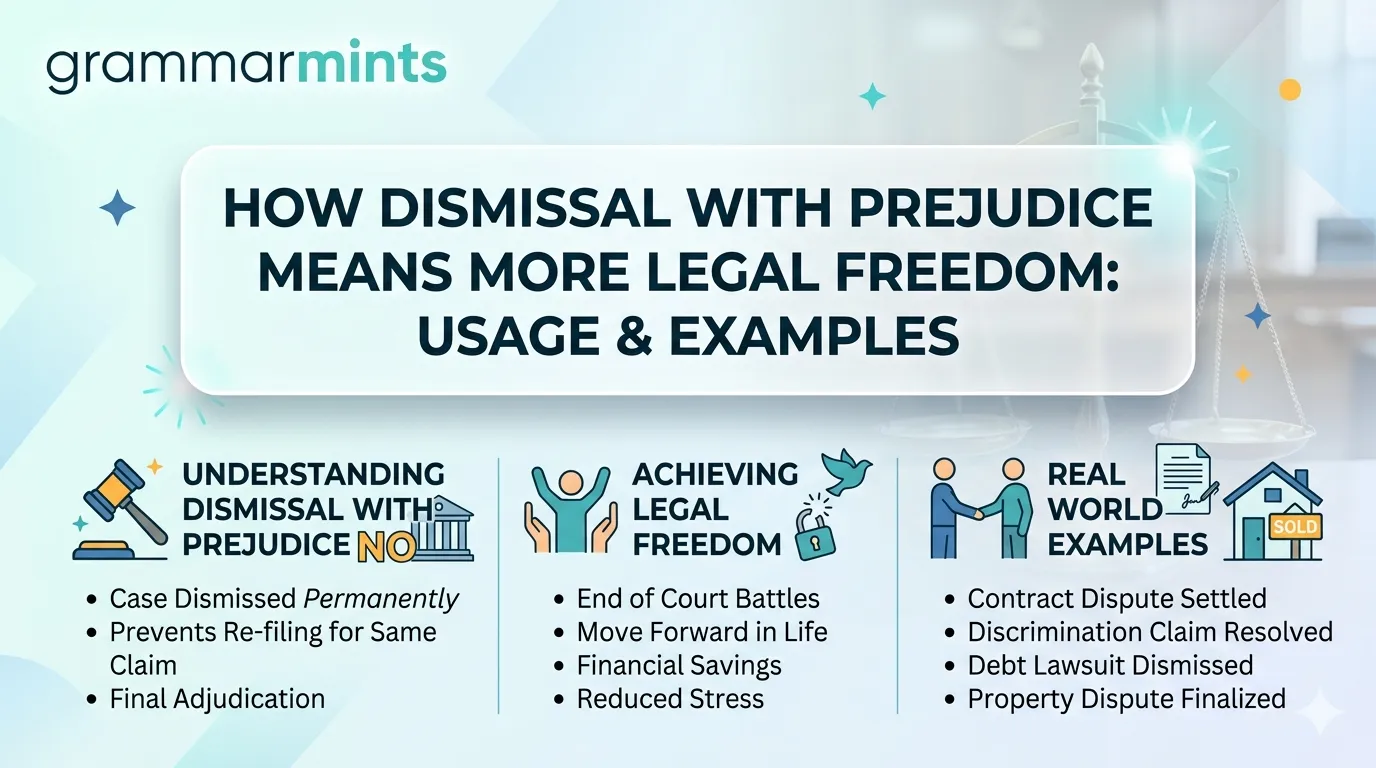
A case that is dismissed with prejudice is permanently closed. In other words, the plaintiff cannot bring the same claim against the same defendant again.
The court has decided that the issue has been resolved to a point where another lawsuit on the same facts is not allowed.
Simple Definition
Dismissed with prejudice means:
- The case is closed permanently.
- The claim cannot usually be refiled.
- The court considers the matter resolved.
- Future lawsuits based on the same issue are generally blocked.
Because of these consequences, this type of dismissal carries significant legal weight.
Why Courts Dismiss Cases With Prejudice
Courts aim to promote fairness and efficiency. Therefore, judges may dismiss cases with prejudice for several reasons.
Common Reasons
| Reason | Description |
|---|---|
| Settlement Agreement | Parties reach a final settlement. |
| Repeated Legal Errors | Plaintiff fails to correct major problems. |
| Lack of Evidence | Evidence does not support the claim. |
| Violation of Court Orders | Rules or deadlines are repeatedly ignored. |
| Fraud or Misconduct | Serious misconduct affects the case. |
For example, if a plaintiff repeatedly files defective complaints and ignores court instructions, a judge may permanently dismiss the case.
Dismissed With Prejudice vs. Dismissed Without Prejudice
Many people confuse these two legal terms. Nevertheless, they have very different outcomes.
Comparison Table
| Feature | With Prejudice | Without Prejudice |
| Case Closed | Yes | Yes |
| Refile Allowed | No | Usually Yes |
| Final Judgment | Often Yes | Usually No |
| Future Claims | Blocked | May Continue |
| Legal Finality | High | Low |
As you can see, a dismissal without prejudice leaves the door open for another filing. By contrast, a dismissal with prejudice closes that door.
Real-Life Example
Imagine a consumer files a lawsuit against a company in 2026 alleging product defects.
The court reviews the evidence over several months. Eventually, the judge determines that the claims lack sufficient legal support and that the plaintiff already had multiple opportunities to correct deficiencies.
As a result, the court dismisses the lawsuit with prejudice.
Consequently:
- The plaintiff cannot file the same claim again.
- The company gains legal certainty.
- Court resources are preserved.
This example demonstrates why final dismissals are important within the legal system.
How a Dismissal With Prejudice Affects Plaintiffs
A plaintiff loses the ability to pursue the same claim again.
Key Effects
- The lawsuit ends permanently.
- Refiling becomes impossible in most cases.
- Legal costs may increase.
- Settlement leverage disappears.
- Appeals may be the only remaining option.
Therefore, plaintiffs should carefully evaluate their legal strategy before reaching this stage.
How It Affects Defendants
For defendants, this outcome often provides significant relief.
Benefits for Defendants
- Protection from repeated lawsuits.
- Reduced legal expenses.
- Greater business certainty.
- Faster dispute resolution.
- Stronger legal closure.
Because of these advantages, defendants sometimes negotiate settlements that include dismissal with prejudice language.
Can a Case Be Reopened?
Generally, reopening a case dismissed with prejudice is extremely difficult.
However, rare exceptions may exist.
Possible Exceptions
- Newly discovered evidence.
- Judicial misconduct.
- Fraud affecting the court process.
- Major procedural errors.
Even then, courts apply strict standards.
Legal Principles Behind Final Dismissals
Several legal doctrines support permanent dismissals.
Res Judicata
Res judicata means “a matter already judged.”
Under this doctrine:
- Courts prevent duplicate lawsuits.
- Previous judgments remain final.
- Legal disputes eventually end.
As a result, parties cannot repeatedly litigate the same issue.
Judicial Efficiency
Courts handle millions of cases annually. Therefore, judges seek to avoid unnecessary duplication.
Permanent dismissals help:
- Reduce court congestion.
- Save taxpayer resources.
- Encourage timely resolutions.
Dismissal Rates in Civil Litigation
The following chart illustrates estimated outcomes in civil disputes based on legal research and court reporting trends.
Civil Case Outcomes (Illustrative)
| Outcome Type | Percentage |
| Settlements | 65% |
| Voluntary Dismissals | 15% |
| Dismissals With Prejudice | 8% |
| Trial Verdicts | 10% |
| Other Outcomes | 2% |
Visual Chart
Settlements ██████████████████████████████ 65%
Voluntary Dismissals ███████ 15%
Trial Verdicts █████ 10%
Dismissals With Prejudice ████ 8%
Other Outcomes █ 2%
These figures vary by jurisdiction and case type.
Common Situations Where This Happens
Employment Cases
Employment disputes sometimes end permanently after settlements or court rulings.
Contract Disputes
Businesses often seek final resolutions to avoid future litigation.
Personal Injury Cases
Judges may dismiss claims permanently when legal requirements are not met.
Consumer Protection Cases
Some claims fail because evidence does not establish liability.
Important Court Examples
Federal and state courts regularly issue dismissals with prejudice.
Notable examples include:
- Failed securities litigation.
- Employment discrimination claims lacking evidence.
- Contract disputes resolved through settlement.
For current legal information, readers can review:
Steps to Avoid a Permanent Dismissal
If you are pursuing legal action, consider these steps.
1. Follow Court Deadlines
Missing deadlines can seriously damage a case.
2. Provide Strong Evidence
Courts expect facts and supporting documentation.
3. Respond to Motions Promptly
Ignoring legal motions may lead to dismissal.
4. Hire Qualified Legal Counsel
Professional guidance often improves outcomes.
5. Comply With Court Orders
Judges expect parties to follow procedural rules.
Related Legal Terms
Understanding similar legal concepts can improve legal literacy.
| Term | Meaning |
| Summary Judgment | Decision without trial. |
| Settlement | Agreement resolving dispute. |
| Appeal | Request for higher court review. |
| Motion to Dismiss | Request to end a case. |
| Res Judicata | Matter already decided. |
You may also find these guides useful:
- /related-guide
- /legal-terms-explained
- /court-procedure-basics
Frequently Asked Questions
Is a dismissal with prejudice a final decision?
Yes. In most situations, it permanently ends the claim.
Can the plaintiff sue again?
Generally, no. The same claim cannot usually be refiled.
Is it the same as losing a trial?
Not exactly. A case may be dismissed before reaching trial.
Can an appeal still happen?
Yes. Certain dismissals may be appealed depending on the circumstances.
Is a settlement often dismissed with prejudice?
Yes. Many settlements include permanent dismissal language to prevent future disputes.
Key Statistics and Facts
| Legal Fact | Value |
| Typical Settlement Rate | 60–70% |
| Federal Civil Trials Reaching Verdict | Less than 5% |
| Appeals Success Rate | Generally Below 20% |
| Cases Ending Before Trial | Over 90% |
These figures highlight why final dismissals play an important role in modern litigation.
Conclusion
The dismissed with prejudice meaning is simple yet powerful. It refers to a court decision that permanently ends a legal claim and prevents it from being filed again. Because this outcome provides finality, courts often use it after settlements, repeated procedural failures, or decisions on the merits.
Whether you are following a lawsuit, studying law, or simply trying to understand legal terminology, knowing the effects of a dismissal with prejudice helps you better interpret court outcomes and legal rights.