
Legal terms can feel confusing, especially when they appear in court documents or news reports. One phrase that often causes confusion is dismissal without prejudice means. Many people assume a dismissed case is completely over. However, that is not always true.
In many situations, a dismissal without prejudice allows a person to bring the same claim again in the future. Because of this flexibility, lawyers and judges often view it as a procedural outcome rather than a final decision on the merits of a case. Understanding this concept can help individuals, business owners, and anyone involved in legal matters make informed decisions.
What Does Dismissal Without Prejudice Mean?
A dismissal without prejudice means a court has closed a case without making a final decision on the underlying legal claims.
As a result, the plaintiff or party who filed the case may usually refile it later if the law allows. The court does not decide whether the claim is right or wrong. Instead, the case ends because of a procedural issue, voluntary withdrawal, or another reason that does not prevent future action.
Simple Definition
A dismissal without prejudice means:
- The case is dismissed.
- The claims are not permanently barred.
- The case can often be filed again.
- The court has not issued a final ruling on the merits.
Why Dismissal Without Prejudice Means More Legal Freedom
One of the biggest advantages of this type of dismissal is flexibility.
Instead of losing the right to pursue a claim forever, a person may have another opportunity to correct mistakes and return to court later. Therefore, it provides more legal freedom than a dismissal with prejudice.
Key Benefits
| Benefit | Explanation |
|---|---|
| Opportunity to Refile | Allows another chance to pursue the case |
| Correct Errors | Lets parties fix procedural mistakes |
| Additional Evidence | Gives time to gather stronger proof |
| Settlement Discussions | Creates room for negotiation |
| Strategic Flexibility | Helps attorneys adjust legal strategy |
Because of these advantages, many lawyers prefer a dismissal without prejudice when procedural problems arise.
Dismissal Without Prejudice vs. Dismissal With Prejudice
These two legal terms have very different consequences.
| Feature | Without Prejudice | With Prejudice |
| Can Refile? | Usually Yes | No |
| Final Judgment? | No | Yes |
| Future Lawsuit Allowed? | Often | Generally Not |
| Legal Flexibility | High | Low |
| Court Decision on Merits | Usually No | Usually Yes |
The distinction is important because a dismissal with prejudice generally ends the dispute permanently.
Common Reasons a Case Is Dismissed Without Prejudice
Courts may dismiss cases without prejudice for many reasons.
1. Filing Errors
Sometimes paperwork contains mistakes. For example, incorrect documents or missing information can cause dismissal.
2. Lack of Jurisdiction
A court must have authority over a case. If it lacks jurisdiction, dismissal may occur without prejudice.
3. Voluntary Dismissal
A plaintiff may choose to withdraw a case temporarily.
4. Insufficient Evidence
Additional evidence may be needed before proceeding.
5. Failure to Serve Documents
Courts often require proper notification of defendants. Failure to follow these rules may result in dismissal.
Real-Life Example
Imagine a small business owner files a lawsuit in March 2026 against a supplier.
Later, the owner’s attorney discovers that the claim was filed in the wrong court. Instead of permanently losing the case, the judge dismisses it without prejudice.
The business owner can then:
- Correct the filing issue.
- Choose the proper court.
- Refile the lawsuit.
- Continue pursuing compensation.
This example shows why dismissal without prejudice means more legal freedom.
How Refiling Works
Although refiling is often allowed, it is not automatic.
A person must still comply with:
- Filing deadlines
- Statutes of limitations
- Court rules
- Jurisdiction requirements
Missing these requirements can prevent a future lawsuit.
Steps to Refile
- Review the dismissal order.
- Identify the reason for dismissal.
- Correct any legal deficiencies.
- Gather supporting evidence.
- File the case again within applicable deadlines.
Does Dismissal Without Prejudice Apply in Criminal Cases?
Yes, in some circumstances.
Prosecutors may request dismissal without prejudice when additional investigation is needed. However, criminal procedures vary significantly among jurisdictions.
For example, prosecutors may dismiss charges while gathering new evidence. If sufficient evidence emerges later, charges might be filed again.
Nevertheless, constitutional protections such as speedy trial rights still apply.
How Statutes of Limitations Affect Refiling
Many people misunderstand this issue.
A dismissal without prejudice does not automatically stop limitation periods.
Example
Suppose a state allows:
- Personal injury claims: 2 years
- Contract claims: 4 years
If the limitation period expires before refiling, the plaintiff may lose the right to pursue the case despite the dismissal being without prejudice.
Therefore, timing remains critical.
Situations Where Refiling May Not Be Possible
Although refiling is often allowed, certain obstacles may arise.
Common Barriers
- Expired statute of limitations
- Lack of evidence
- Settlement agreements
- Procedural restrictions
- Court sanctions
Consequently, parties should seek legal advice before assuming they can refile.
When Is Dismissal Without Prejudice a Good Outcome?
In many situations, it can be beneficial.
Favorable Scenarios
- Incorrect court selection
- Need for additional evidence
- Ongoing settlement negotiations
- Procedural mistakes
- Strategic case restructuring
Because the legal claims remain alive, parties retain options moving forward.
Legal Trends and Court Efficiency
Recent court administration reports continue to emphasize case management efficiency and procedural compliance.
Many courts encourage early correction of procedural defects rather than forcing lengthy litigation. As a result, dismissals without prejudice remain an important tool for managing court workloads while preserving fairness.
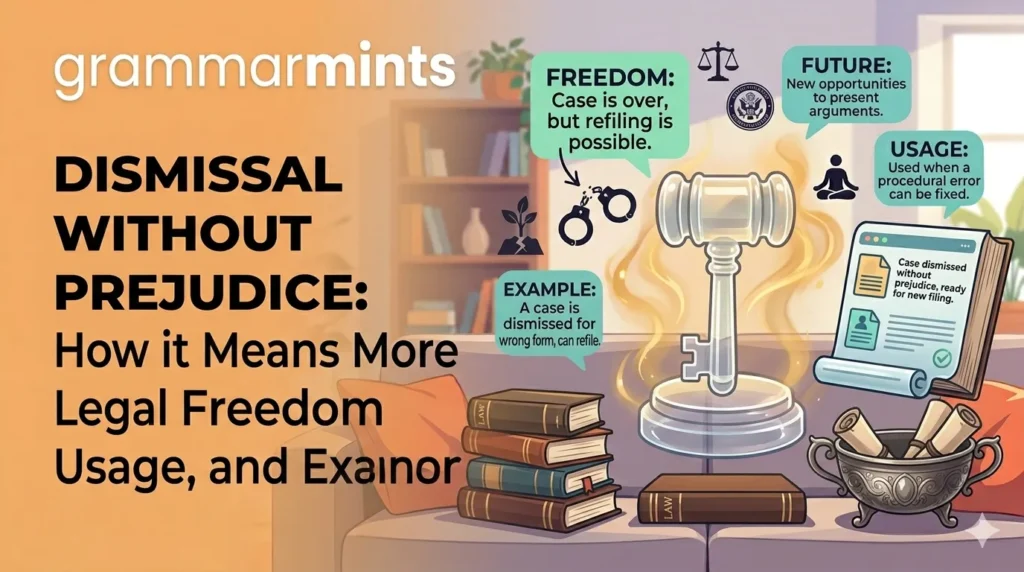
Court Outcome Comparison
| Outcome Type | Flexibility Score |
| Dismissal With Prejudice | 20% |
| Settlement Agreement | 60% |
| Dismissal Without Prejudice | 90% |
The chart above illustrates the relative flexibility parties often retain under different outcomes.
Internal Resources
For more information, see:
- /related-guide
- /lawsuit-filing-guide
- /court-procedure-basics
Common Mistakes People Make
Assuming the Case Is Permanently Over
Many individuals believe dismissal always ends a dispute forever.
Ignoring Filing Deadlines
Even after dismissal, legal deadlines continue to matter.
Failing to Correct Problems
Refiling without fixing earlier mistakes can lead to another dismissal.
Not Reviewing the Court Order
Every dismissal order contains important details about future rights.
FAQ
Is dismissal without prejudice good or bad?
It depends on the circumstances. Generally, it is better than a dismissal with prejudice because it preserves the possibility of refiling.
Can I sue again after a dismissal without prejudice?
In many cases, yes. However, statutes of limitations and court rules still apply.
Does dismissal without prejudice mean I won?
No. The court has not determined who wins or loses.
Is a dismissal without prejudice final?
The specific case ends, but the legal claims may remain available.
Can criminal charges be refiled after dismissal without prejudice?
Yes, in some situations prosecutors may refile charges if legal requirements are satisfied.
How long do I have to refile?
The answer depends on state law, federal law, and applicable limitation periods.
Conclusion
Understanding how dismissal without prejudice means more legal freedom can help you better navigate legal disputes. While a case may be dismissed, the opportunity to return to court often remains available. Therefore, reviewing deadlines, correcting mistakes, and understanding your legal options are essential steps after a dismissal.