You may have seen “you r” in a text message, social media comment, or online chat. At first glance, it can look confusing because it is not standard English.
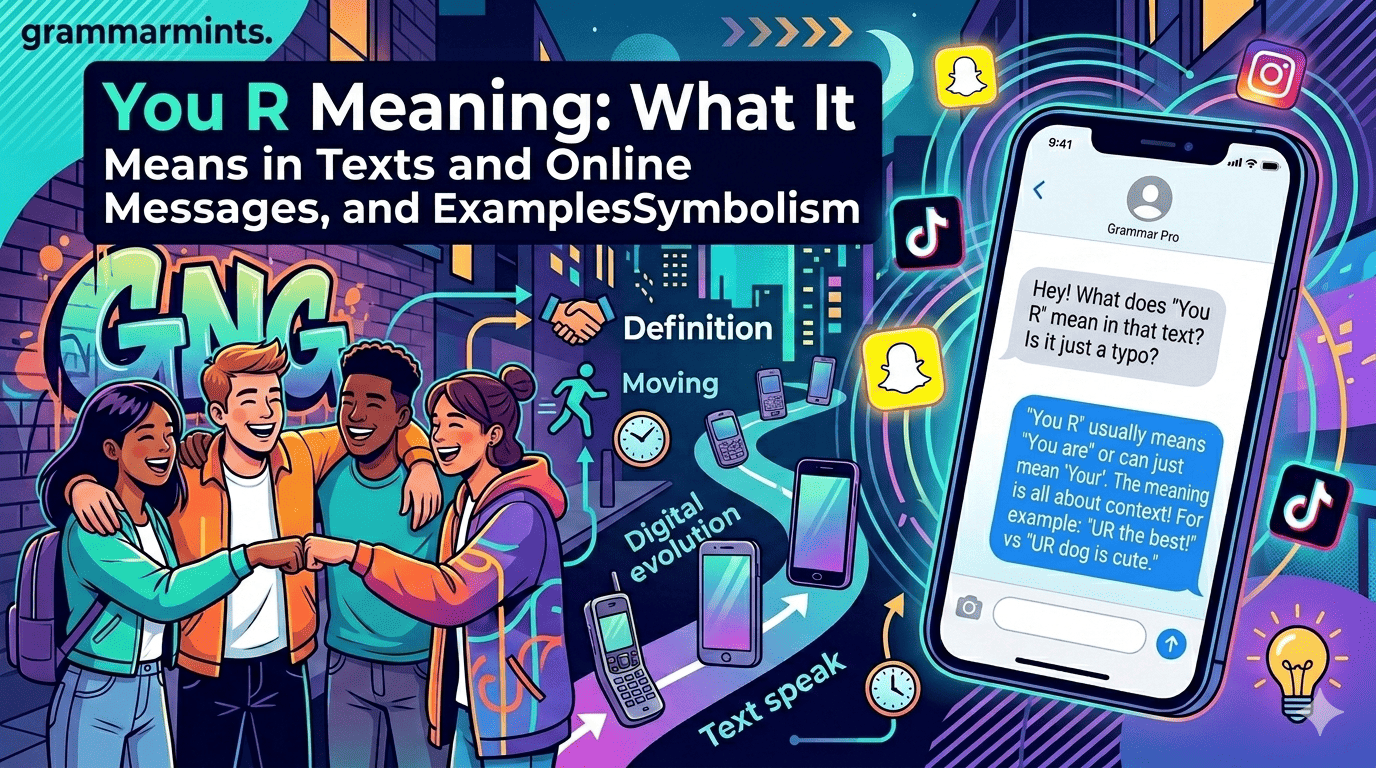
In most cases, “you r” is an informal shorthand for “you are.” People often use it when typing quickly on phones or messaging apps.
Quick Answer
You r usually means “you are.”
Example:
- “You r funny.”
- Standard English: “You are funny.”
It is a casual texting shortcut and is not considered correct formal writing.
What Does “You R” Mean?
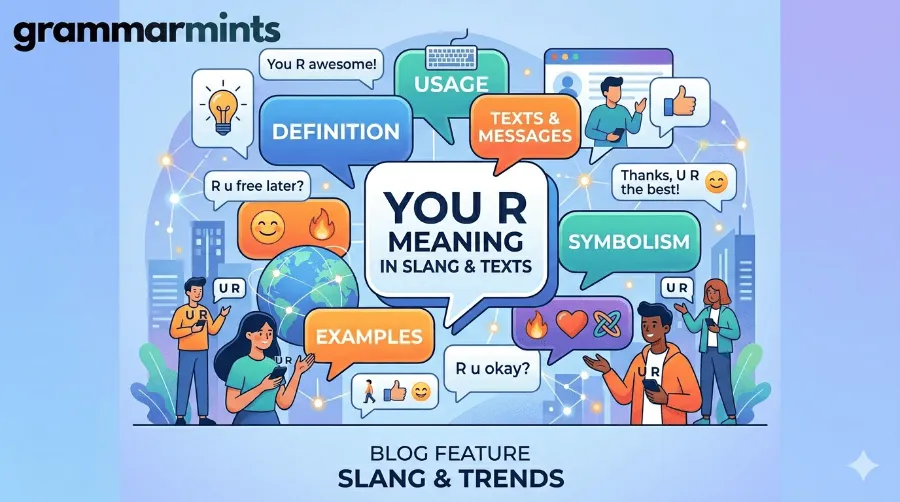
The phrase “you r” combines the pronoun you with the letter r, which represents the word are.
People use it to save time when typing.
For example:
- “You r the best.”
- “You r right.”
- “You r welcome.”
In each sentence, r replaces are.
Meaning in Text Messages
Texting often encourages short forms and abbreviations.
Because of this, many people write:
- you r = you are
- u r = you are
- ur = your or you’re, depending on context
Among these forms, “you r” is less common than “u r,” but both usually mean the same thing.
Is “You R” Correct English?
No. “You r” is not standard English.

It is considered an informal texting style rather than proper grammar.
Formal version:
- You are amazing.
Informal version:
- You r amazing.
Use the full form in school, business, and professional communication.
Part of Speech
The phrase “you r” is not a recognized grammatical term or dictionary entry.
Instead, it is a shorthand combination of:
| Part | Function |
|---|---|
| You | Pronoun |
| R | Informal substitute for “are” |
Together, they create an informal version of you are.
How to Use “You R”
People typically use you r in:
• Text messages
• Group chats
• Social media comments
• Casual online conversations
Examples:
- “You r late again.”
- “You r doing great.”
- “You r my best friend.”
- “You r invited.”
These examples sound natural in casual conversations.
When to Use It
Use you r when:
• Messaging friends
• Chatting casually online
• Sending quick texts
• Posting informal comments
Most readers understand the meaning immediately.
When Not to Use It
Avoid you r in:
• Academic writing
• Business emails
• Job applications
• Professional reports
• Formal letters
Instead, write you are.
Example:
❌ You r qualified for the position.
✅ You are qualified for the position.
Common Contexts
Friendly Conversations
Friends often use shortcuts while chatting.
Example:
“You r always making me laugh.”
Social Media
People use abbreviations to type quickly.
Example:
“You r awesome!”
Gaming Chats
Fast-paced games encourage shorter messages.
Example:
“You r next.”
Examples of “You R” in Sentences
Here are some everyday examples:
| Informal | Standard English |
|---|---|
| You r funny. | You are funny. |
| You r welcome. | You are welcome. |
| You r doing well. | You are doing well. |
| You r my friend. | You are my friend. |
| You r right. | You are right. |
Related Texting Shortcuts
Several abbreviations have similar meanings.
• U = You
• R = Are
• U R = You are
• Thx = Thanks
• Pls = Please
• Btw = By the way
These shortcuts are common in casual messaging.
Common Mistakes
Confusing “You R” and “Your”
Many learners confuse these forms.
Correct:
- You are kind.
- Your book is on the table.
Incorrect:
- Your kind.
Using It in Formal Writing
Text abbreviations belong in casual communication.
Professional writing should use complete words.
Assuming Everyone Uses It
Not everyone writes this way. Some people prefer standard spelling even in texts.
FAQs
What does “you r” mean in texting?
It usually means “you are.”
Is “you r” slang?
It is more accurately described as a texting abbreviation rather than slang.
Is “you r” grammatically correct?
No. It is an informal shortcut used in messages and chats.
What’s the difference between “you r” and “u r”?
Both generally mean “you are.” The second version is simply shorter.
Can I use “you r” in an email?
Only in very casual personal emails. Avoid it in professional communication.
Conclusion
“You r” is a common texting abbreviation that usually means “you are.” People use it to save time in chats, texts, and social media conversations.
While most readers understand it, the phrase is informal. In professional, academic, or formal writing, always use the complete form “you are.”